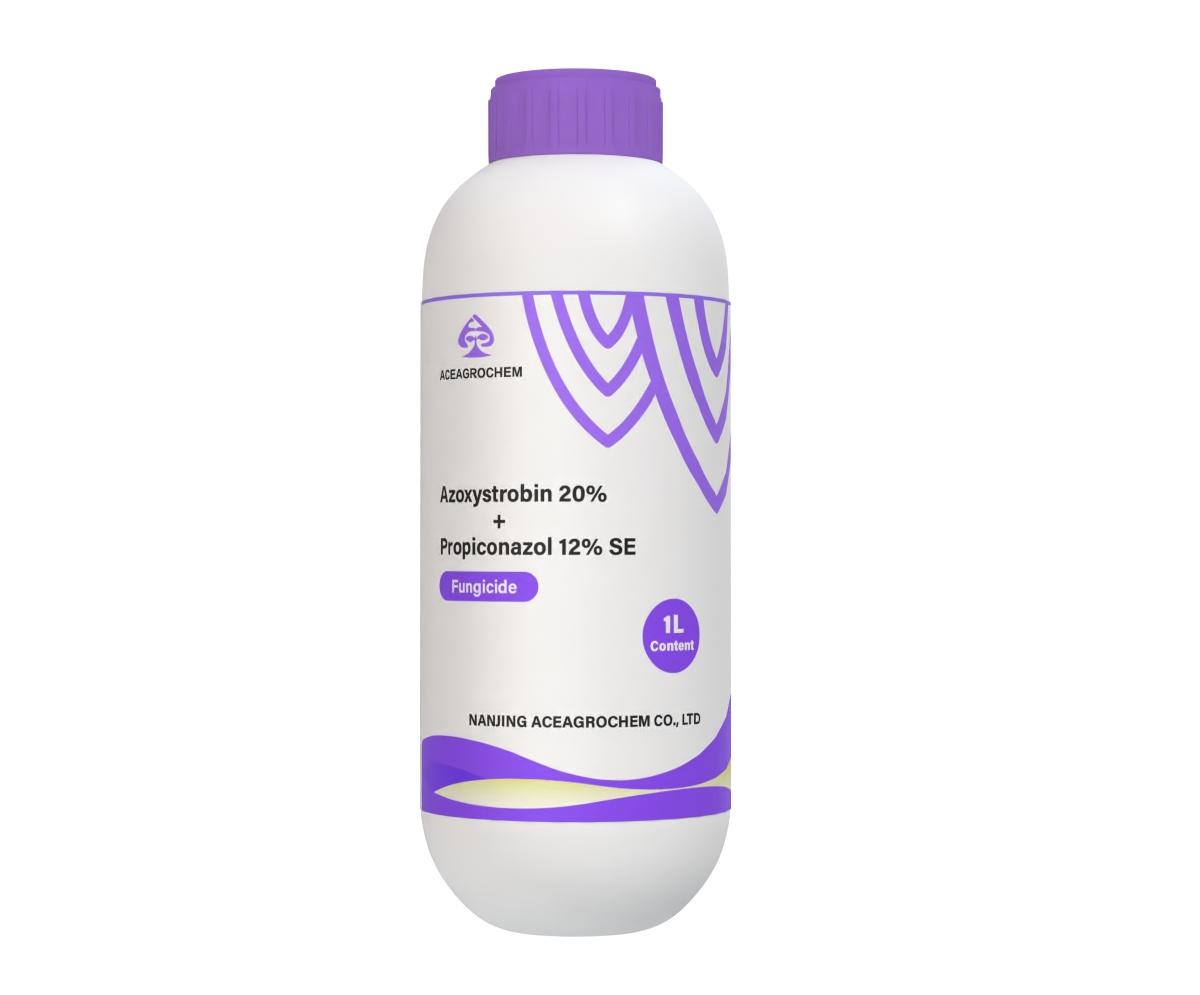
Azoxystrobin 20% + Propiconazol 12% SE
Classification:
Fungicide
Formulation:
Azoxystrobin 20% + Propiconazol 12% SE (Suspension Emulsion)
CAS NO:
Azoxystrobin: 131860-33-8;
Propiconazole: 60207-90-1
USAGE:
This fungicide is used for controlling a wide range of fungal diseases in
various crops such as cereals, fruits, and vegetables. It can effectively
prevent and treat diseases caused by Ascomycetes, Basidiomycetes, and
Deuteromycetes, like powdery mildew, rust, and leaf spot.
Pack size:
250mL, 500mL, 1L, 5L, 20L/drum, or as required
Direction for Use
| Crop | Target Diseases | Dosage (20%+12% SE) | Application Timing | Remarks |
|---|---|---|---|---|
| Wheat | Powdery mildew, Rust | 500-750 mL/ha | At the early stage of disease occurrence | 1) REI: 12 hrs 2) Max 2 applications/season |
| Apple | Scab | 750-1000 mL/ha | Before the disease epidemic period | Add wetting agent for better adhesion |
| Grape | Downy mildew, Powdery mildew | 600-900 mL/ha | During the growth period, especially in high-humidity weather | PHI: 21 days |
| Tomato | Early blight, Late blight | 400-600 mL/ha | When the first symptoms appear | Use a fine-mist sprayer |
| Cucumber | Powdery mildew, Anthracnose | 300-500 mL/ha | At the early growth stage | Check for phytotoxicity on sensitive varieties |
Product Details
Mode of Action:
-Azoxystrobin inhibits mitochondrial respiration by binding to the cytochrome bc1
complex, blocking electron transfer and energy production in fungal cells.
-Propiconazole inhibits the biosynthesis of ergosterol, an essential component of
the fungal cell membrane, leading to membrane dysfunction and cell death.
-Systemic action with good translocation in plants, providing long-lasting
protection.
Benefits:
-Broad-spectrum activity against a variety of fungal diseases.
-Long-lasting efficacy, reducing the frequency of applications.
-Enhances plant health and improves crop yield and quality.
-Compatible with many other Pesticide for tank-mixing.
Precautions:
-PPE: Chemical-resistant gloves, respirator, goggles.
-Do not apply in hot and sunny weather (above 35°C).
-Do not mix with alkaline Pesticide.
-Storage: Keep in a cool, dry place at 0°C to 30°C.
Environmental Hazards:
-Toxic to fish and aquatic invertebrates.
-Do not discharge into water bodies or near water sources.
-Low toxicity to birds and mammals.
-Degradable in soil with a half-life of about 10-20 days.