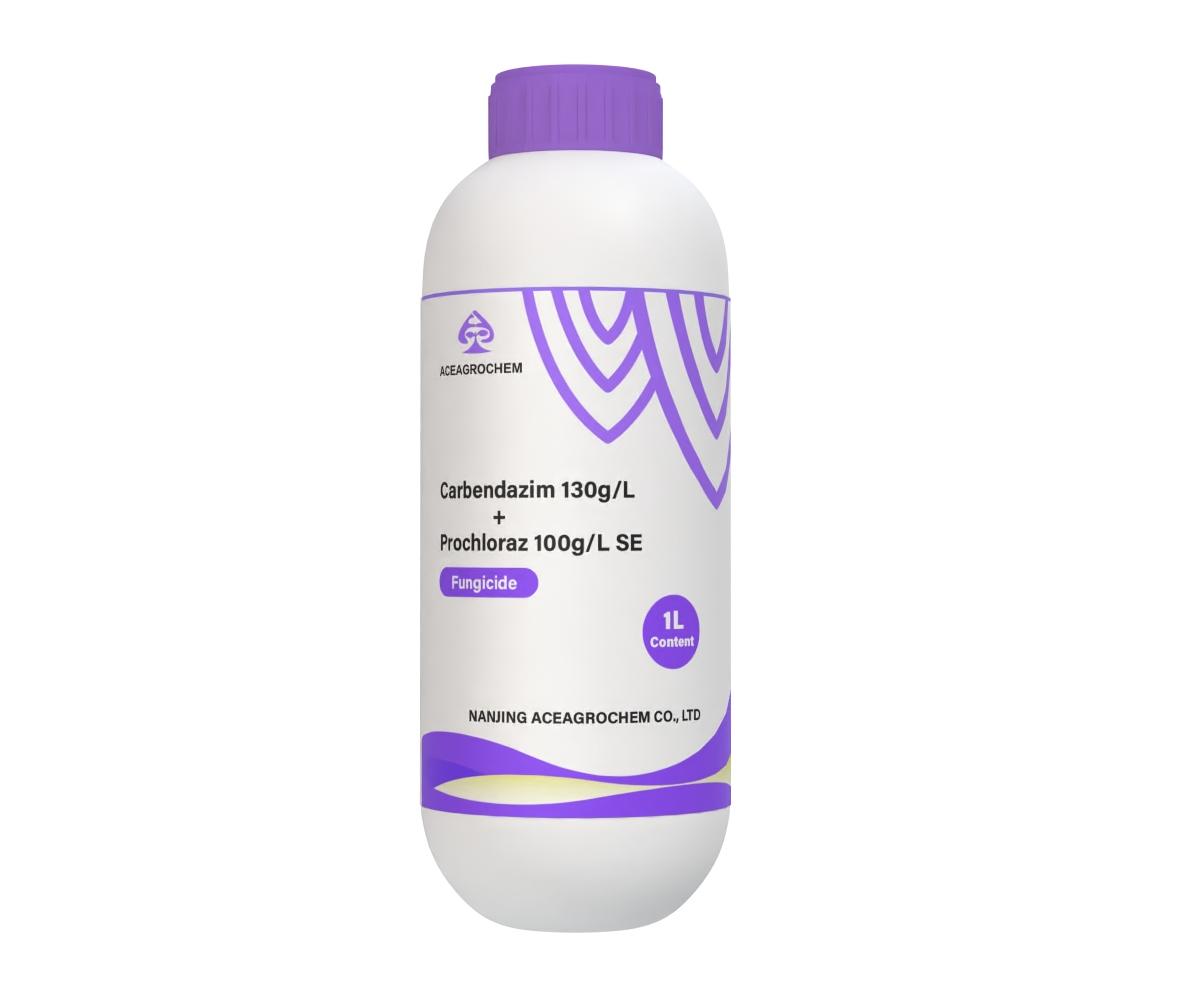
Carbendazim 130g/L + Prochloraz 100g/L SE
Classification:
Fungicide
Formulation:
Carbendazim 130g/L + Prochloraz 100g/L SE (Suspension Emulsion)
CAS NO:
Carbendazim: 10605-21-7;
Prochloraz: 67747-09-5
USAGE:
A broad-spectrum fungicide used for controlling a wide range of fungal
diseases in various crops such as fruits, vegetables, cereals, etc. Effective
against diseases caused by Ascomycetes, Basidiomycetes, and Deuteromycetes.
Pack size:
500mL, 1L, 5L, 20L/drum, or as required
Direction for Use
| Crop | Target Fungi | Dosage (130g/L Carbendazim + 100g/L Prochloraz SE) | Application Timing | Remarks |
|---|---|---|---|---|
| Fruits (e.g., apples) | Apple scab, Anthracnose | 800-1200 mL/ha | Before or at the early stage of disease occurrence | 1) REI: 48 hrs 2) Max 2 applications/season |
| Vegetables (e.g., cucumbers) | Downy mildew, Powdery mildew | 600-1000 mL/ha | When the first symptoms are observed | Add spreader-sticker for better adhesion |
| Cereals (e.g., wheat) | Septoria leaf blotch, Rust | 1000-1500 mL/ha | Tillering to booting stage | PHI: 30 days |
Product Details
Mode of Action:
-Carbendazim inhibits the synthesis of microtubules in fungi, preventing normal
cell division.
-Prochloraz inhibits the biosynthesis of ergosterol in the fungal cell membrane,
disrupting membrane integrity.
-Systemic action, can be absorbed by plants and translocated to various parts.
Benefits:
-Broad-spectrum activity against multiple fungal diseases.
-Long-lasting protection.
-Can improve the quality and yield of crops.
Precautions:
-PPE: Chemical-resistant gloves, respirator, protective clothing
-Do not apply in hot and dry weather
-Do not mix with alkaline Pesticide
-Storage: Store in a cool, dry place away from sunlight at 0°C-30°C
Environmental Hazards:
-Toxic to bees and other beneficial insects
-Do not contaminate water bodies
-Moderate toxicity to fish
-Biodegradable in soil (half-life 10-15 days)