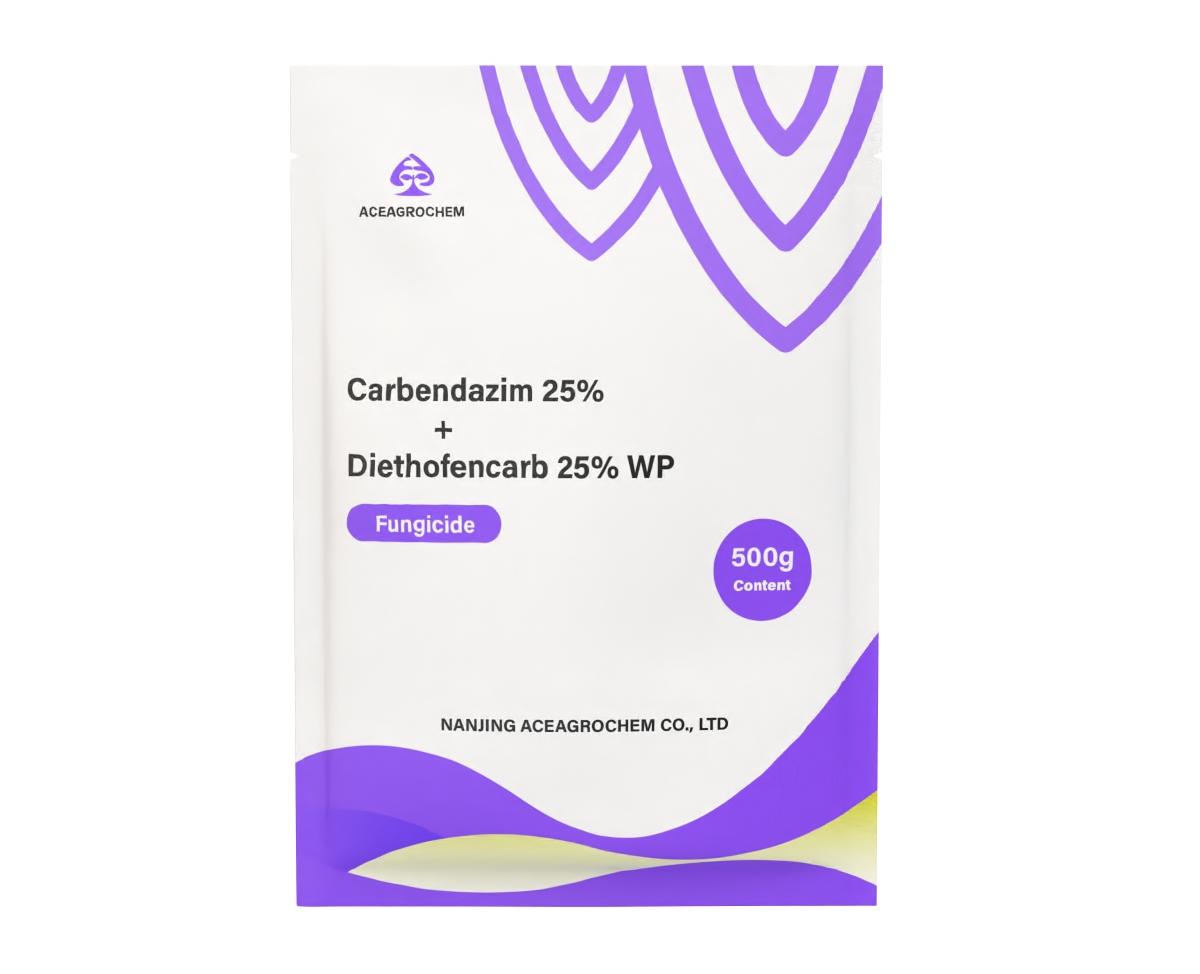
Carbendazim 25% + Diethofencarb 25% WP
Classification:
Fungicide
Formulation:
Carbendazim 25% + Diethofencarb 25% WP (Wettable Powder)
CAS NO:
Carbendazim: 10605-21-7;
Diethofencarb: 87130-20-9
USAGE:
This fungicide is used for controlling a variety of fungal diseases in crops
such as fruits, vegetables, and ornamental plants. It is effective against
Botrytis cinerea, Sclerotinia sclerotiorum, and other fungal pathogens.
Pack size:
100g, 250g, 500g, 1kg/bag, or as required
Direction for Use
| Crop | Target Diseases | Dosage (25% + 25% WP) | Application Timing | Remarks |
|---|---|---|---|---|
| Tomato | Botrytis cinerea | 500-700 g/ha | At the early stage of disease occurrence | 1) REI: 3 days 2) Max 3 applications/season |
| Strawberry | Gray mold | 400-600 g/ha | Before flowering and during the fruiting period | Add a spreader-sticker for better adhesion |
| Cucumber | Sclerotinia rot | 600-800 g/ha | When the disease is first noticed | PHI: 7 days |
Product Details
Mode of Action:
-Carbendazim inhibits the synthesis of fungal microtubules, preventing the normal
division and growth of fungal cells.
-Diethofencarb interferes with the spindle formation in fungal cells during
mitosis.
-The combination of the two has a synergistic effect on controlling fungal
diseases.
Benefits:
-Broad-spectrum fungicidal activity.
-Good preventive and curative effects.
-Compatible with many other Pesticide and Fertilizer.
-Low phytotoxicity to most crops when used as directed.
Precautions:
-PPE: Wear protective clothing, gloves, and a respirator.
-Do not apply in windy or rainy weather.
-Do not mix with alkaline Pesticide.
-Storage: Keep in a cool, dry place at 0°C to 30°C.
Environmental Hazards:
-Toxic to bees and other beneficial insects. Avoid application during the flowering
period of crops.
-May be toxic to aquatic organisms. Do not contaminate water sources.
-Low toxicity to birds and mammals.
-Biodegradable in soil with a half-life of 10-20 days.