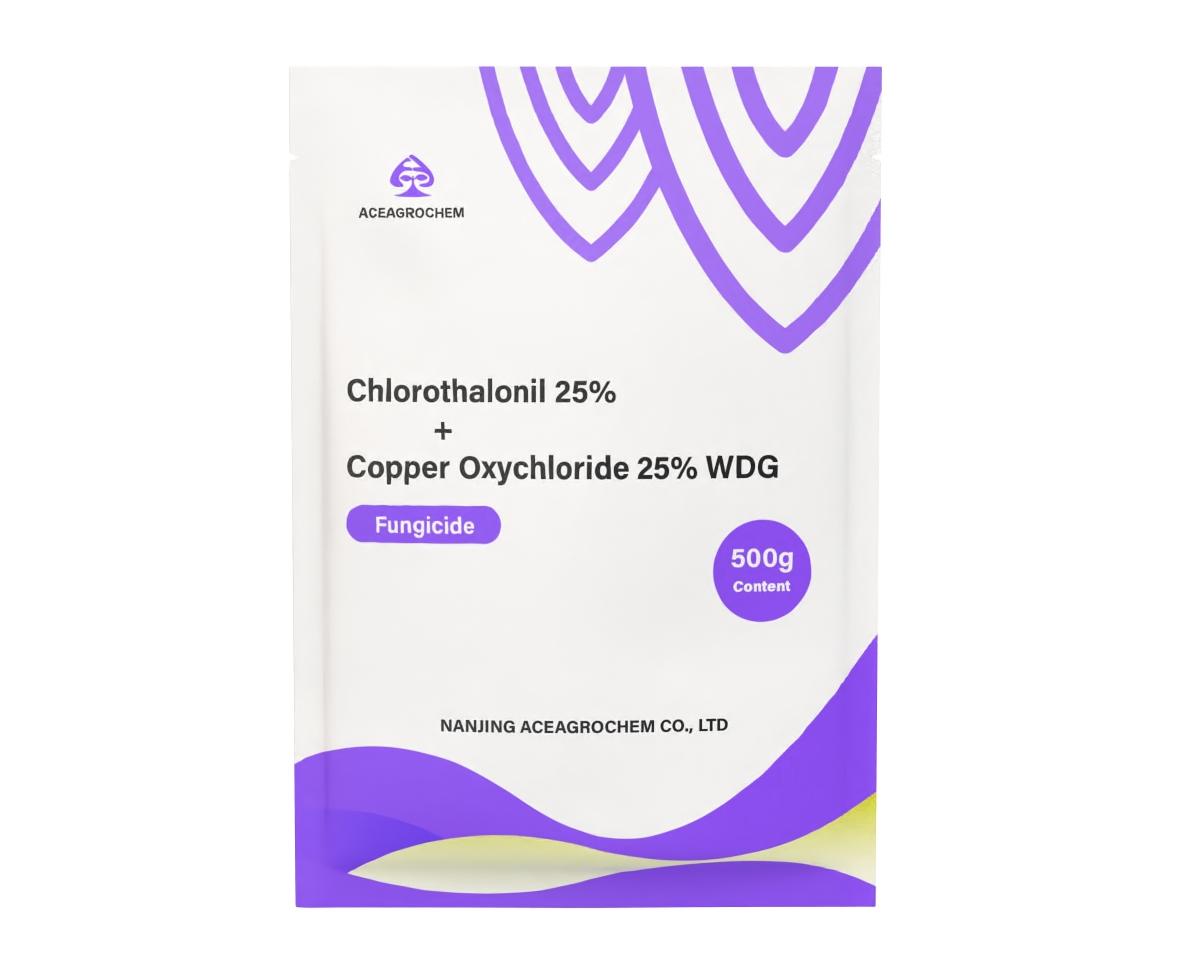
Chlorothalonil 25% + Copper Oxychloride 25% WDG
Classification:
Fungicide
Formulation:
Chlorothalonil 25% + Copper Oxychloride 25% WDG (Water-Dispersible Granule)
CAS NO:
Chlorothalonil: 1897-45-6;
Copper Oxychloride: 1332-40-7
USAGE:
Used to control a wide range of fungal diseases in various crops such as fruits,
vegetables, cereals, etc. Effective against diseases like early blight, late
blight, leaf spot, and rust.
Pack size:
500g, 1kg, 5kg, 20kg/bag, or as required
Direction for Use
| Crop | Target Diseases | Dosage (25% Chlorothalonil + 25% Copper Oxychloride WDG) | Application Timing | Remarks |
|---|---|---|---|---|
| Tomato | Early blight, Late blight | 1000-1500 g/ha | Before the onset of disease or at the early stage | 1) REI: 24 hrs 2) Max 3-4 applications/season |
| Potato | Late blight | 1200-1800 g/ha | Regular interval from tuber initiation | PHI: 14 days |
| Apple | Leaf spot, Rust | 800-1200 g/ha | From bud break to harvest at specific intervals | Add spreader-sticker for better adhesion |
| Grape | Downy mildew, Powdery mildew | 1000-1600 g/ha | Before the disease pressure increases | Check for phytotoxicity on new varieties |
Product Details
Mode of Action:
-Chlorothalonil: Multi-site contact fungicide, inhibits fungal spore germination
and mycelial growth.
-Copper Oxychloride: Releases copper ions which react with certain enzymes in
fungi, disrupting their normal physiological functions.
-Combined action provides broad-spectrum protection.
Benefits:
-Broad-spectrum control of multiple fungal diseases.
-Long-lasting protection with residual effect.
-Compatible with many other Pesticide for tank-mixing.
-Suitable for integrated pest management programs.
Precautions:
-PPE: Wear protective clothing, gloves, and goggles.
-Do not apply in strong sunlight or when the temperature exceeds 35°C.
-Do not mix with alkaline Pesticide.
-Storage: Store in a cool, dry place away from direct sunlight and heat sources.
Environmental Hazards:
-Toxic to aquatic organisms, avoid contamination of water bodies.
-May have some impact on beneficial insects, use with caution in areas with high
insect biodiversity.
-Low toxicity to mammals, but still follow safety procedures.