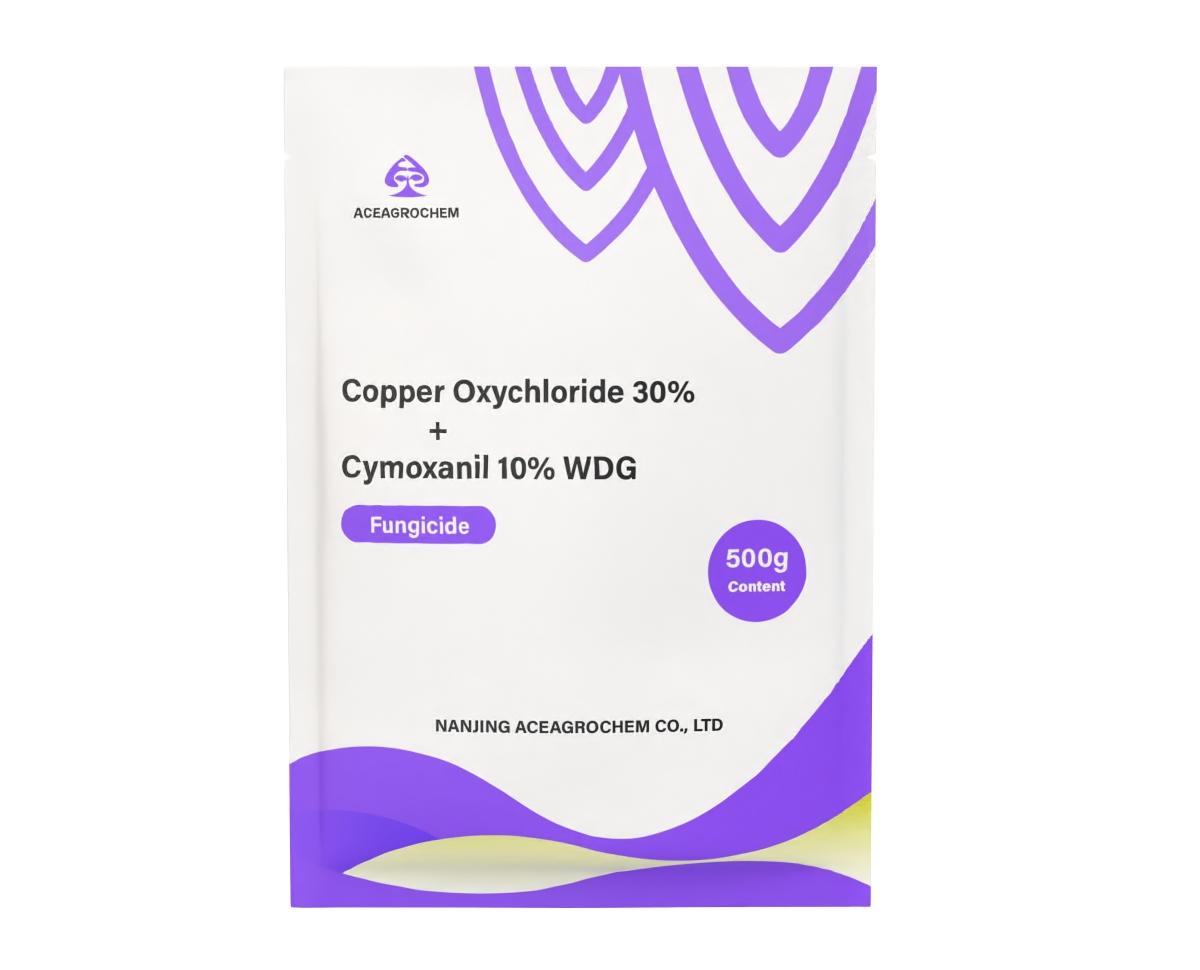
Copper Oxychloride 30% + Cymoxanil 10% WDG
Classification:
Fungicide
Formulation:
Copper Oxychloride 30% + Cymoxanil 10% WDG (Water Dispersible Granules)
CAS NO:
Copper Oxychloride: 1332-65-6;
Cymoxanil: 57966-95-7
USAGE:
A fungicide for controlling a variety of fungal diseases in different crops such
as vegetables, fruits, and field crops. Effective against diseases like downy
mildew, late blight, etc.
Pack size:
100g, 250g, 500g, 1kg/bag, or as required
Direction for Use
| Crop | Target Diseases | Dosage (30% Copper Oxychloride + 10% Cymoxanil WDG) | Application Timing | Remarks |
|---|---|---|---|---|
| Tomato | Late blight | 300-500 g/ha | At the early stage of disease appearance | 1) REI: 48 hrs 2) Max 3 applications/season |
| Cucumber | Downy mildew | 250-400 g/ha | Before the onset of disease or at the first sign of infection | Add spreader-sticker for better adhesion |
| Grape | Downy mildew | 350-550 g/ha | During the growing season, especially during humid periods | PHI: 21 days |
| Potato | Late blight | 400-600 g/ha | Before the occurrence of disease under high-risk conditions | Use a high-volume sprayer for uniform coverage |
| Lettuce | Downy mildew | 200-300 g/ha | At the seedling stage and during growth | Check for phytotoxicity on a small area first |
Product Details
Mode of Action:
-Copper oxychloride: Releases copper ions that act on the cell membrane and enzyme
systems of fungi, disrupting their normal physiological functions.
-Cymoxanil: Inhibits the germination of fungal spores and the growth of mycelium,
having both protective and curative effects.
-The combination provides a broad-spectrum and long-lasting antifungal effect.
Benefits:
-Broad-spectrum control of multiple fungal diseases
-Good preventive and curative properties
-Low resistance risk due to the combination of two active ingredients
-Suitable for different application methods (spraying, etc.)
Precautions:
-PPE: Chemical-resistant gloves, respirator, protective clothing
-Do not apply during heavy rain or strong winds
-Avoid contact with skin, eyes, and clothing
-Storage: Keep in a cool, dry, and well-ventilated place at 5°C to 30°C
Environmental Hazards:
-Moderately toxic to aquatic organisms
-Do not contaminate water bodies such as rivers, lakes, and ponds
-Low toxicity to birds and mammals
-Degradable in soil with proper environmental conditions