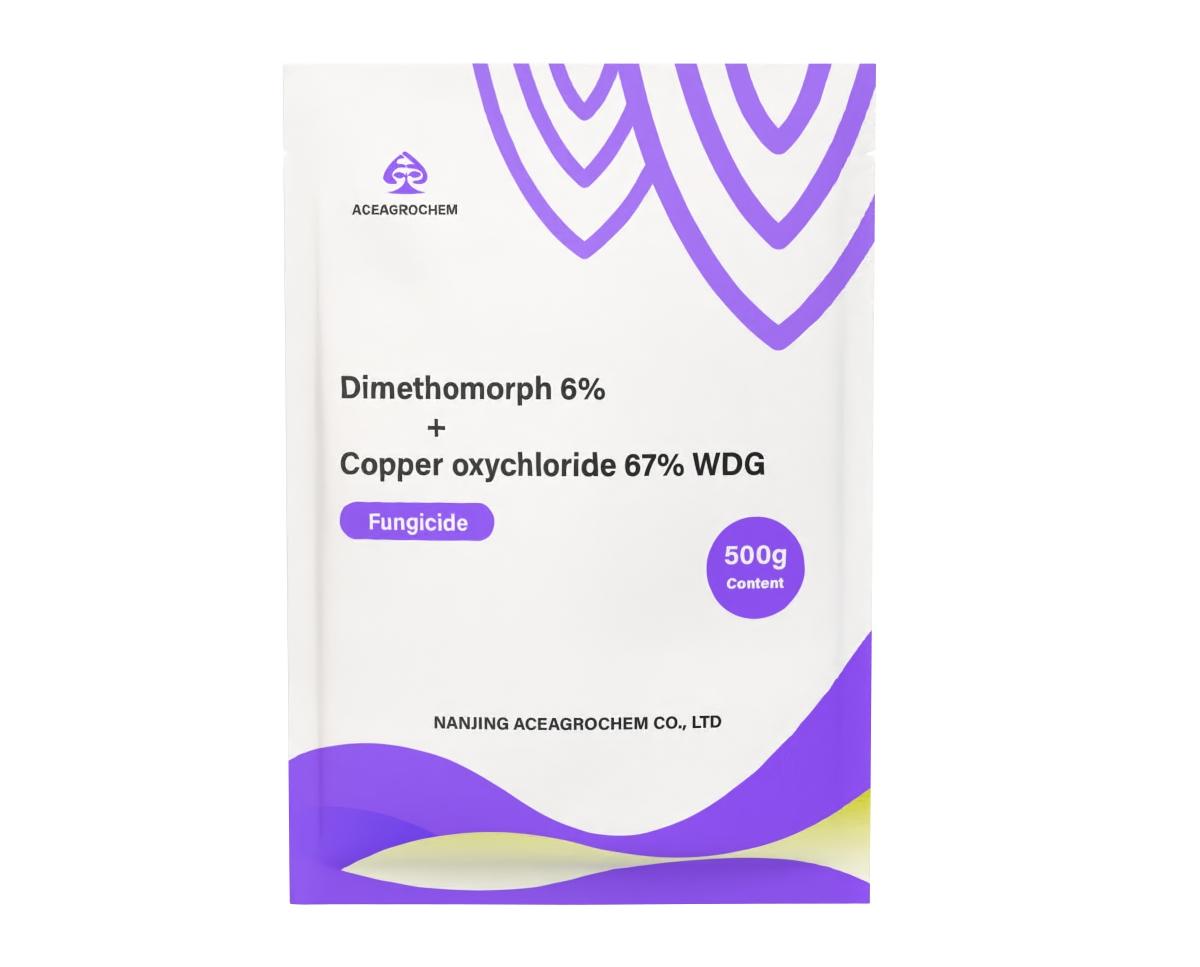
Dimethomorph 6% + Copper oxychloride 67% WDG
Classification:
Fungicide
Formulation:
Dimethomorph 6% + Copper oxychloride 67% WDG (Water-Dispersible Granules)
CAS NO:
Dimethomorph: 110488-70-5;
Copper oxychloride: 1332-40-7
USAGE:
Effective against a wide range of fungal diseases in various crops such as
grapes, potatoes, tomatoes, and cucurbits. It provides both preventive and
curative control of diseases like downy mildew, late blight, etc.
Pack size:
100g, 250g, 500g, 1kg/bag, or as required
Direction for Use
| Crop | Target Diseases | Dosage (6% Dimethomorph + 67% Copper oxychloride WDG) | Application Timing | Remarks |
|---|---|---|---|---|
| Grape | Downy mildew | 1000-1500 g/ha | At the early stage of disease appearance | 1) REI: 48 hrs 2) Max 3 applications/season |
| Potato | Late blight | 1200-1800 g/ha | Before the onset of disease, or at the first sign | Add a spreader-sticker for better adhesion |
| Tomato | Early blight, Late blight | 1000-1600 g/ha | When the weather is favorable for disease development | PHI: 10 days |
| Cucurbits | Downy mildew | 800-1200 g/ha | At the beginning of the growing season or when symptoms appear | Spray evenly on both sides of leaves |
Product Details
Mode of Action:
-Dimethomorph inhibits the synthesis of cell wall components in fungi by
interfering with the formation of β-1,3-glucan.
-Copper oxychloride acts as a contact fungicide, releasing copper ions that damage
the cell membranes of fungi and disrupt their metabolic processes.
-The combination provides both systemic and contact activity for comprehensive
disease control.
Benefits:
-Broad-spectrum activity against multiple fungal diseases.
-Good rainfastness due to the formulation.
-Compatible with many other Pesticide for tank-mixing.
-Helps to improve the overall health and yield of crops.
Precautions:
-PPE: Wear chemical-resistant gloves, a face mask, and protective clothing.
-Do not apply during extremely hot or windy conditions.
-Do not tank-mix with alkaline Pesticide.
-Storage: Keep in a cool, dry place away from direct sunlight at 0°C to 35°C.
Environmental Hazards:
-Toxic to aquatic organisms, especially fish.
-Do not contaminate water bodies such as rivers, lakes, and ponds.
-Low toxicity to birds and mammals when used as directed.
-Copper may accumulate in soil over time, so long-term continuous use should be
monitored.