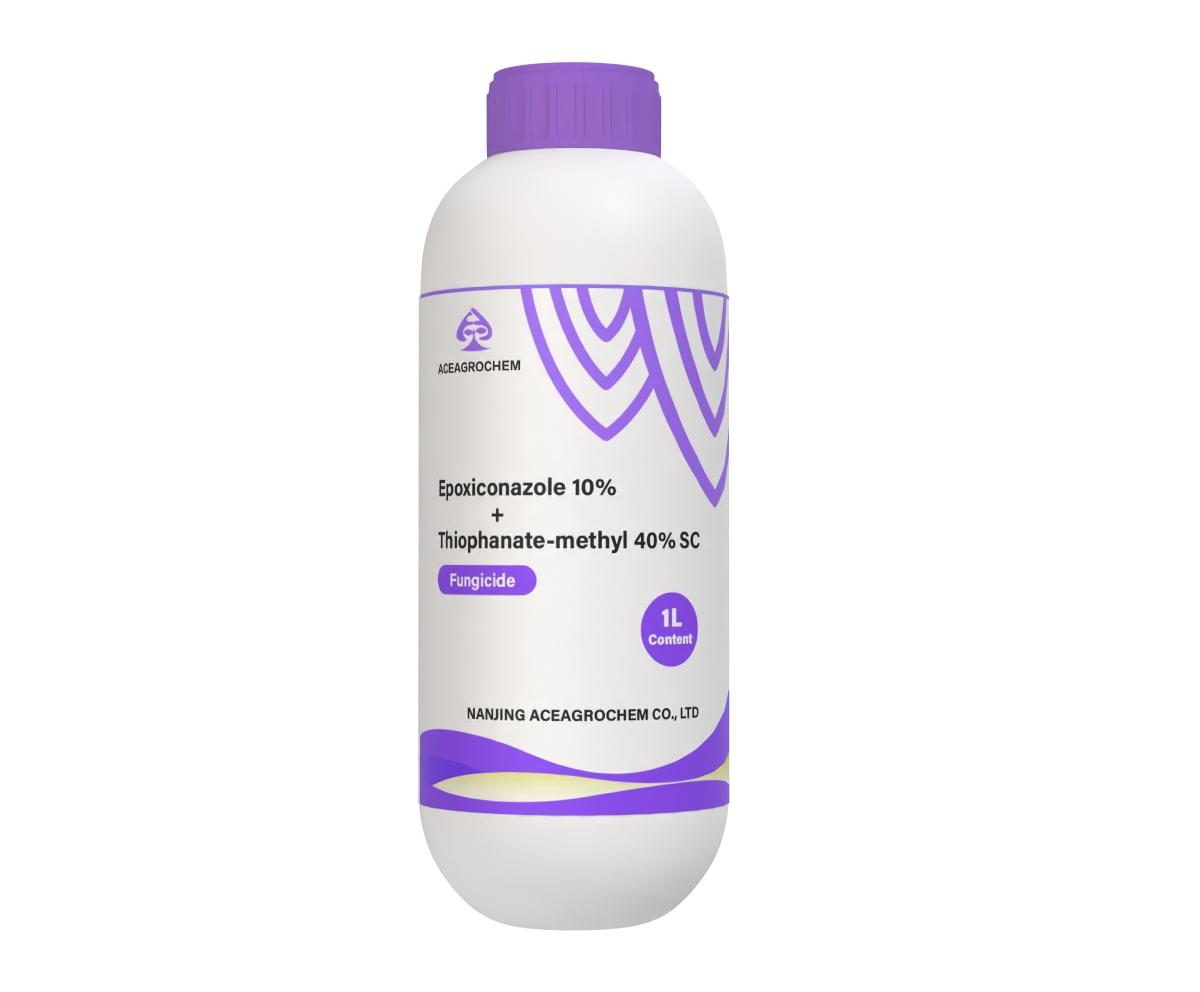
Epoxiconazole 10% + Thiophanate-methyl 40% SC
Classification:
Fungicide
Formulation:
Epoxiconazole 10% + Thiophanate-methyl 40% SC (Suspension Concentrate)
CAS NO:
Epoxiconazole: 133855-98-8;
Thiophanate-methyl: 23564-05-8
USAGE:
This fungicide is used for preventing and controlling a variety of fungal
diseases in crops such as wheat, rice, fruits, and vegetables. It is effective
against diseases like powdery mildew, rust, scab, and leaf spot.
Pack size:
500mL, 1L, 5L, 20L/drum, or as required
Direction for Use
| Crop | Target Diseases | Dosage (Epoxiconazole 10% + Thiophanate-methyl 40% SC) | Application Timing | Remarks |
|---|---|---|---|---|
| Wheat | Powdery mildew, rust | 800-1200 mL/ha | At the early stage of disease occurrence | 1) REI: 24 hrs 2) Max 2 applications/season |
| Rice | Sheath blight, blast | 1000-1500 mL/ha | Before the disease peak period | Add a spreader for better control |
| Apple | Scab | 600-1000 mL/ha | From the blossom-end to the fruit-setting stage | PHI: 21 days |
| Grape | Downy mildew | 700-1100 mL/ha | At the early stage of new shoot growth | Check the spraying equipment for uniform coverage |
| Tomato | Leaf spot | 500-900 mL/ha | When the first symptoms appear | Avoid spraying during high-temperature periods |
Product Details
Mode of Action:
-Epoxiconazole inhibits the biosynthesis of ergosterol in fungal cells, disrupting
the cell membrane structure.
-Thiophanate-methyl is converted into carbendazim in plants, which inhibits the
mitosis of fungal cells.
-The combination has a systemic and protective effect, translocating within the
plant to protect new growth.
Benefits:
-Broad-spectrum control of multiple fungal diseases.
-Long-lasting protective effect.
-Compatible with many other Pesticide for tank-mixing.
-Low residue on crops.
Precautions:
-PPE: Chemical-resistant gloves, goggles, and overalls.
-Do not apply in heavy rain or when the wind speed exceeds 15 km/h.
-Do not mix with alkaline Pesticide.
-Storage: Keep in a cool, dry place at 0°C to 35°C.
Environmental Hazards:
-Toxic to bees and aquatic organisms.
-Do not contaminate water sources, honey-gathering areas, and fish ponds.
-Low toxicity to birds and mammals.
-Biodegradable in soil (half-life 10-20 days).