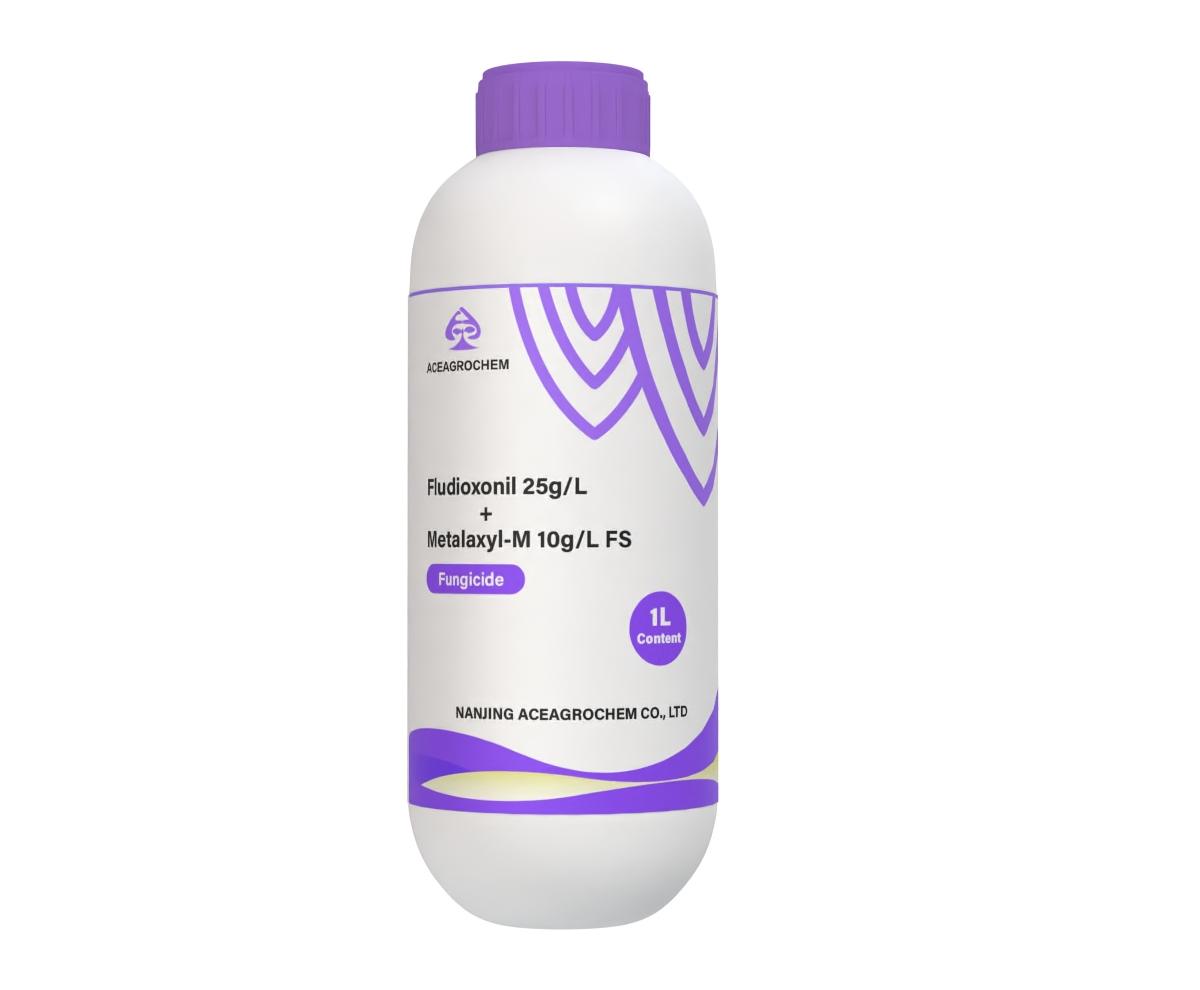
Fludioxonil 25g/L + Metalaxyl-M 10g/L FS
Classification:
Fungicide
Formulation:
Fludioxonil 25g/L + Metalaxyl-M 10g/L FS (Flowable concentrate for seed
treatment)
CAS NO:
Fludioxonil: 131341-86-1;
Metalaxyl-M: 70630-17-0
USAGE:
Seed treatment fungicide for controlling a wide range of fungal diseases in
various crops such as cereals, oilseeds, and vegetables. Effective against
Fusarium, Rhizoctonia, Pythium, and other fungal pathogens.
Pack size:
250mL, 500mL, 1L, 5L, 20L/drum, or as required
Direction for Use
| Crop | Target Diseases | Dosage (25g/L Fludioxonil + 10g/L Metalaxyl-M FS) | Application Timing | Remarks |
|---|---|---|---|---|
| Cereals (Wheat, Barley) | Fusarium, Rhizoctonia | 200-300 mL/100 kg seeds | Before sowing | 1) Ensure uniform seed coverage 2) REI: 24 hrs |
| Oilseeds (Rapeseed) | Pythium, Rhizoctonia | 150-250 mL/100 kg seeds | Before sowing | Use a suitable seed treatment equipment |
| Vegetables (Tomato, Cucumber) | Fusarium, Pythium | 100-200 mL/100 kg seeds | Before sowing | PHI: Consult local regulations |
Product Details
Mode of Action:
-Fludioxonil: Acts on the fungal cell membrane, disrupting the normal function of
the cell membrane and leading to cell death.
-Metalaxyl-M: Systemic fungicide that inhibits ribonucleic acid (RNA) synthesis in
fungi, preventing their growth and reproduction.
-The combination provides both contact and systemic protection.
Benefits:
-Broad-spectrum control of multiple fungal diseases
-Protects seeds and seedlings during the early growth stages
-Improves crop emergence and stand establishment
-Reduces the need for foliar fungicide applications in the early season
Precautions:
-PPE: Wear chemical-resistant gloves, goggles, and protective clothing
-Do not allow seed treated with this product to be used for food, feed, or oil
purposes
-Do not apply in areas where strong winds may cause drift
-Storage: Keep in a cool, dry place at temperatures between 0°C and 30°C
Environmental Hazards:
-Toxic to aquatic organisms, avoid contamination of water sources
-Low toxicity to birds and mammals when used as directed
-In soil, it has a relatively low mobility and is biodegradable over time