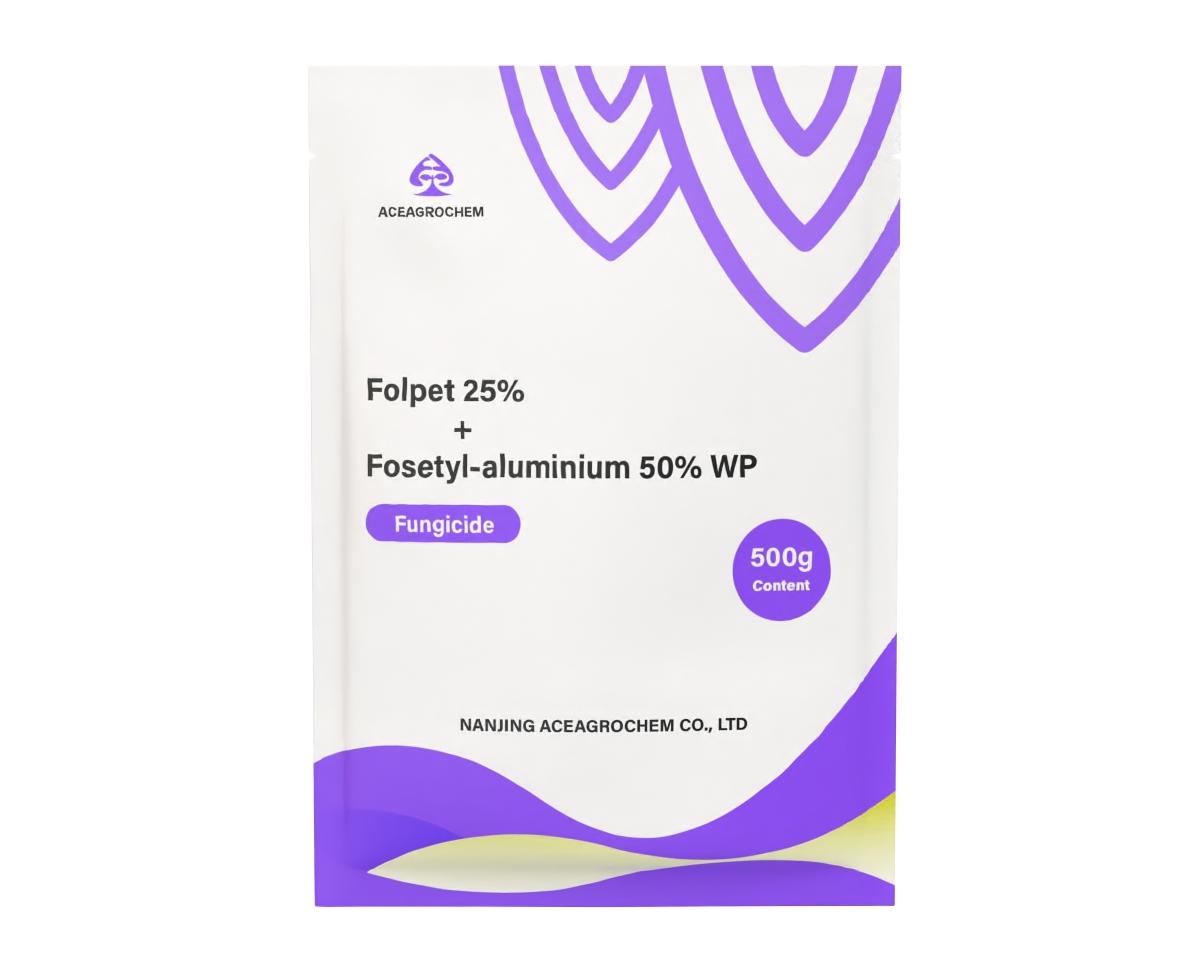
Folpet 25% + Fosetyl-aluminium 50% WP
Classification:
Fungicide
Formulation:
Folpet 25% + Fosetyl-aluminium 50% WP (Wettable Powder)
CAS NO:
Folpet: 133-07-3;
Fosetyl-aluminium: 39148-24-8
USAGE:
Broad-spectrum fungicide for controlling a wide range of fungal diseases in
various crops such as fruits, vegetables, and ornamentals. Effective against
diseases like downy mildew, late blight, and some leaf spot diseases.
Pack size:
500g, 1kg, 5kg, 20kg/bag, or as required
Direction for Use
| Crop | Target Diseases | Dosage (Folpet 25% + Fosetyl-aluminium 50% WP) | Application Timing | Remarks |
|---|---|---|---|---|
| Grape | Downy mildew | 1000-1500 g/ha | Before the onset of disease and at regular intervals during the growing season | 1) REI: 24 hrs 2) Max 3 applications/season |
| Tomato | Late blight | 800-1200 g/ha | At the first sign of disease and repeat every 7-10 days | Add wetting agent for better adhesion |
| Potato | Late blight | 900-1300 g/ha | Early disease stage and continue spraying during the susceptible period | PHI: 14 days |
| Apple | Some leaf spot diseases | 1200-1600 g/ha | During the rainy season or when disease pressure is high | Use a high-volume sprayer for better coverage |
| Cucumber | Downy mildew | 700-1100 g/ha | At early infection stage | Check for phytotoxicity on new varieties |
Product Details
Mode of Action:
-Folpet: It acts as a contact fungicide, forming a protective film on the plant
surface to prevent fungal spore germination and penetration.
-Fosetyl-aluminium: It is a systemic fungicide, absorbed by the plant and
translocated to different parts, inhibiting the growth and development of fungi
inside the plant.
Benefits:
-Combination of contact and systemic action provides comprehensive disease
control.
-Suitable for a variety of crops.
-Low resistance risk due to the dual-active ingredient system.
-Good rainfastness.
Precautions:
-PPE: Wear chemical-resistant gloves, a face mask, and goggles.
-Do not apply in windy conditions to avoid drift.
-Mix thoroughly before spraying.
-Storage: Store in a cool, dry place away from sunlight and heat sources.
Environmental Hazards:
-Toxic to aquatic organisms, so avoid contamination of water bodies.
-Low toxicity to birds and mammals when used as directed.
-Degrades in the soil over time.