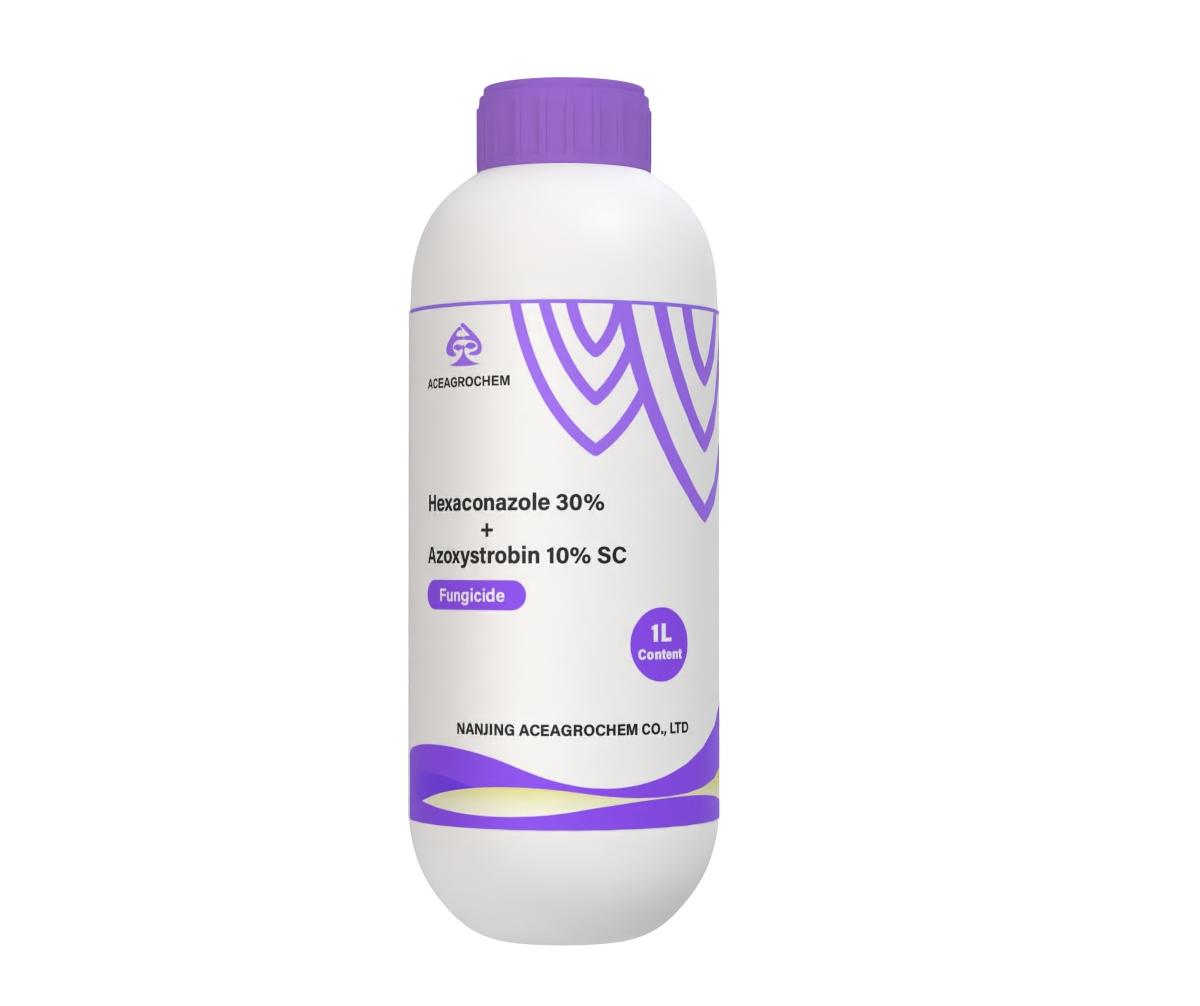
Hexaconazole 30% + Azoxystrobin 10% SC
Classification:
Fungicide
Formulation:
Hexaconazole 30% + Azoxystrobin 10% SC (Suspension Concentrate)
CAS NO:
Hexaconazole: 79983-71-4;
Azoxystrobin: 131860-33-8
USAGE:
It is a broad-spectrum fungicide used for controlling various fungal diseases
in a wide range of crops such as cereals, fruits, and vegetables. It is
effective against diseases caused by Ascomycetes, Basidiomycetes, and
Deuteromycetes fungi.
Pack size:
500mL, 1L, 5L, 20L/drum, or as required
Direction for Use
| Crop | Target Diseases | Dosage (30% Hexaconazole + 10% Azoxystrobin SC) | Application Timing | Remarks |
|---|---|---|---|---|
| Wheat | Rust, Powdery mildew | 800-1000 mL/ha | At the early stage of disease appearance | 1) REI: 12 hrs 2) Max 2 applications/season |
| Apple | Scab, Anthracnose | 600-800 mL/ha | Before the onset of disease or at the early infection stage | Add surfactant for better coverage |
| Grape | Downy mildew, Powdery mildew | 700-900 mL/ha | During the growth period, especially in high-humidity seasons | PHI: 21 days |
| Tomato | Early blight, Late blight | 500-700 mL/ha | When the first symptoms appear | Use a fine-spray nozzle for better penetration |
| Cucumber | Powdery mildew, Anthracnose | 400-600 mL/ha | At the beginning of the disease | Check for any signs of phytotoxicity |
Product Details
Mode of Action:
-Hexaconazole inhibits the biosynthesis of ergosterol in fungi, disrupting the cell
membrane structure and function.
-Azoxystrobin inhibits mitochondrial respiration in fungi, blocking energy
production.
-Systemic action, it can be absorbed by plants and translocated within the plant to
protect new growth.
Benefits:
-Broad-spectrum protection against multiple fungal diseases.
-Long-lasting residual effect, providing extended protection.
-Improves crop yield and quality by preventing disease damage.
-Compatible with many other Pesticide for tank-mixing.
Precautions:
-PPE: Chemical-resistant gloves, goggles, and a respirator in confined
spaces.
-Do not apply in windy conditions (wind speed over 15 km/h) to avoid drift.
-Follow the mixing instructions carefully when tank-mixing with other
products.
-Storage: Keep in a cool, dry place at 0°C to 35°C.
Environmental Hazards:
-Toxic to aquatic organisms, avoid contamination of water bodies.
-May have an impact on beneficial insects, use with caution in areas with high
populations of pollinators.
-Low toxicity to birds and mammals.
-Degradable in soil with a half-life of 10-20 days depending on soil
conditions.