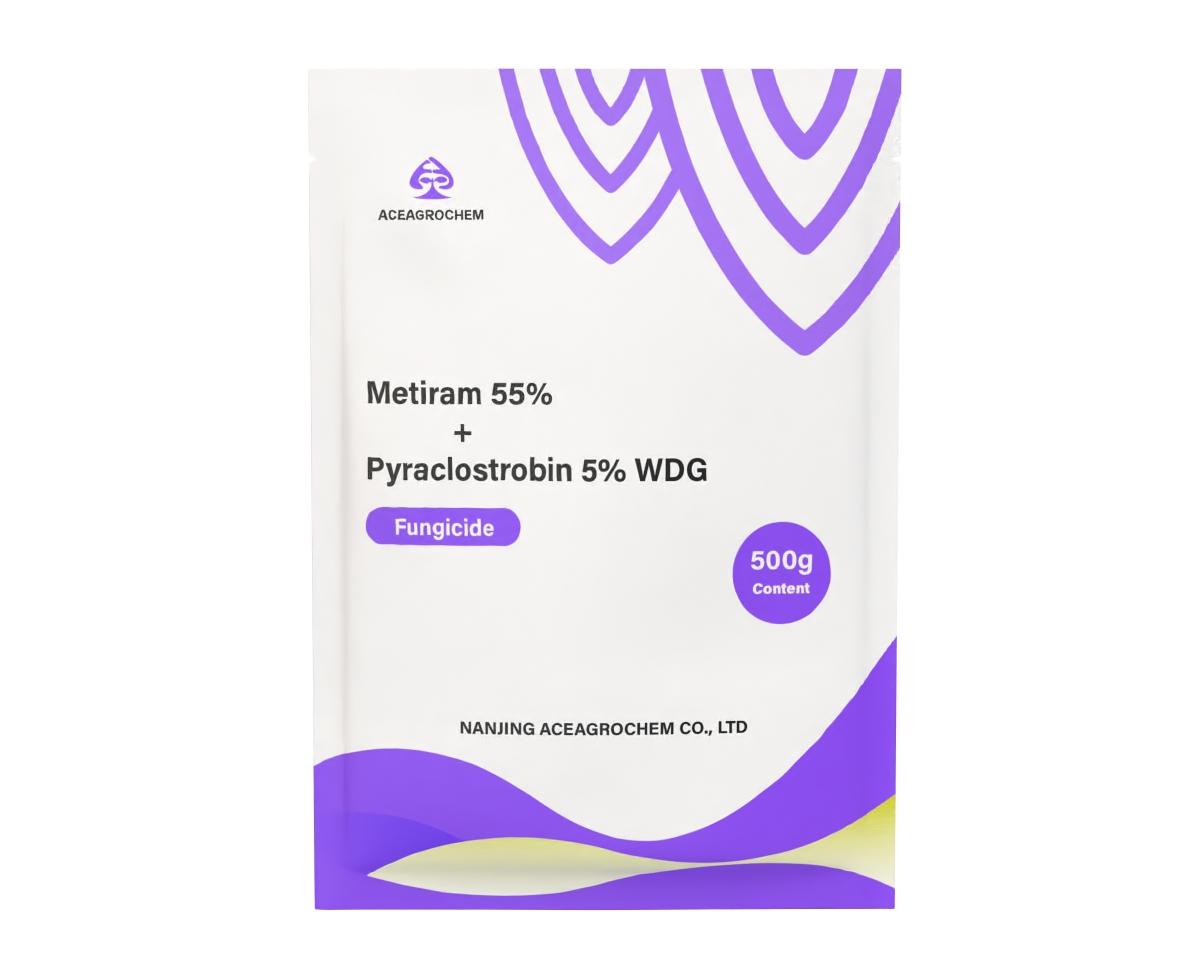
Metiram 55% + Pyraclostrobin 5% WDG
Classification:
Fungicide
Formulation:
Metiram 55% + Pyraclostrobin 5% WDG (Water-Dispersible Granules)
CAS NO:
Metiram: 9006-42-2;
Pyraclostrobin: 175013-18-0
USAGE:
This fungicide is used for controlling a wide range of fungal diseases in
various crops such as fruits (e.g., apples, grapes), vegetables (e.g., tomatoes,
cucumbers), and cereals. It effectively prevents and treats diseases caused by
pathogens like Alternaria, Botrytis, and Cercospora.
Pack size:
100g, 500g, 1kg/bag, or as required
Direction for Use
| Crop | Target Diseases | Dosage (Metiram 55% + Pyraclostrobin 5% WDG) | Application Timing | Remarks |
|---|---|---|---|---|
| Apples | Apple scab, Alternaria leaf spot | 300-500 g/ha | Before disease onset or at the early stage of infection | 1) REI: 12 hrs 2) Max 3 applications/season |
| Tomatoes | Early blight, Late blight | 400-600 g/ha | At the first sign of disease symptoms | Add a spreader for better adhesion |
| Grape | Downy mildew, Powdery mildew | 350-550 g/ha | During the growing season, especially during humid weather | PHI: 21 days |
| Cucumbers | Cucumber anthracnose, Gummy stem blight | 450-650 g/ha | Before flowering and during the fruiting period | Use a fine-mist sprayer for better coverage |
Product Details
Mode of Action:
-Metiram acts as a protectant fungicide, forming a protective film on the plant
surface to prevent fungal spore germination and penetration.
-Pyraclostrobin is a strobilurin fungicide that inhibits mitochondrial respiration
in fungi, disrupting their energy production and growth.
-The combination provides both preventive and curative effects.
Benefits:
-Broad-spectrum activity against multiple fungal diseases.
-Good rainfastness, providing long-lasting protection.
-Compatible with many other Pesticide for tank-mixing.
-Low phytotoxicity to most crops.
Precautions:
-PPE: Wear chemical-resistant gloves, a mask, and goggles.
-Do not apply in windy conditions (wind speed > 10 km/h).
-Follow the recommended dosage and application frequency to avoid resistance
development.
-Storage: Store in a cool, dry place at 0°C-30°C.
Environmental Hazards:
-Toxic to aquatic organisms, avoid contamination of water bodies.
-Low toxicity to birds and mammals.
-Biodegradable in soil with a moderate half-life.