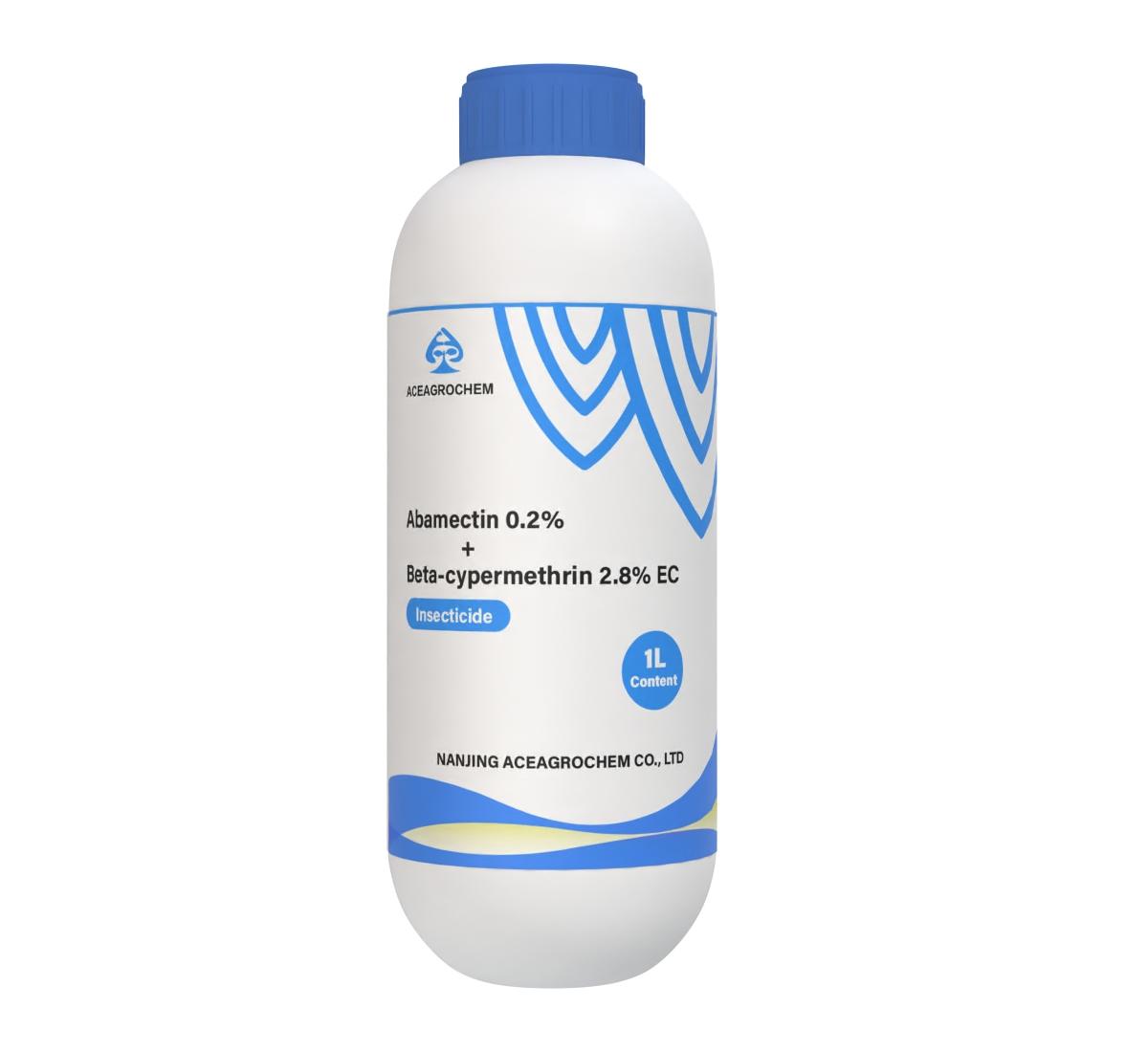
Abamectin 0.2% + Beta-cypermethrin 2.8% EC
Classification:
Insecticide
Formulation:
Abamectin 0.2% + Beta-cypermethrin 2.8% EC (Emulsifiable Concentrate)
CAS NO:
Abamectin: 71751-41-2;
Beta-cypermethrin: 65731-84-2
USAGE:
A broad-spectrum insecticide used to control a wide range of pests in various
crops such as vegetables, fruits, cotton, and cereals. It is effective against
Lepidoptera, Coleoptera, Homoptera and other pests.
Pack size:
500mL, 1L, 5L, 20L/drum, or as required
Direction for Use
| Crop | Target Pests | Dosage (0.2% Abamectin + 2.8% Beta-cypermethrin EC) | Application Timing | Remarks |
|---|---|---|---|---|
| Vegetables | Lepidopteran pests | 800-1200 mL/ha | At the early stage of pest occurrence | 1) REI: 12 hrs 2) Max 2 applications/season |
| Fruits | Coleopteran pests | 1000-1500 mL/ha | When pests are active | Add a spreader for better control |
| Cotton | Homopteran pests | 1200-1800 mL/ha | During the peak of pest population | PHI: 21 days |
| Cereals | Grasshoppers | 900-1300 mL/ha | Before pest infestation becomes severe | Use with caution on sensitive varieties |
Product Details
Mode of Action:
-Abamectin: Binds to glutamate-gated chloride channels, causing an increase in
the flow of chloride ions, leading to hyperpolarization of nerve cells and paralysis
of pests.
-Beta-cypermethrin: Acts on the nervous system of insects, interfering with the
sodium ion channels of nerve membranes, causing continuous nerve impulses and
ultimately killing pests.
-The combination of the two has a synergistic effect, enhancing insect-killing
efficiency.
Benefits:
-Broad-spectrum insect control, covering multiple types of pests.
-High efficiency, can quickly reduce pest populations.
-Good compatibility with other Pesticide, can be used in tank-mixtures.
-Relatively low resistance risk due to the combination of two active ingredients.
Precautions:
-PPE: Chemical-resistant gloves, goggles, long-sleeved clothing.
-Do not apply when winds exceed 20 km/h.
-Do not mix with alkaline Pesticide.
-Storage: Keep in a cool, dry place at 0°C to 35°C.
Environmental Hazards:
-Toxic to bees and aquatic organisms.
-Do not apply near beehives or water sources.
-Low toxicity to birds and mammals.
-Biodegradable in soil (half-life 5-10 days).