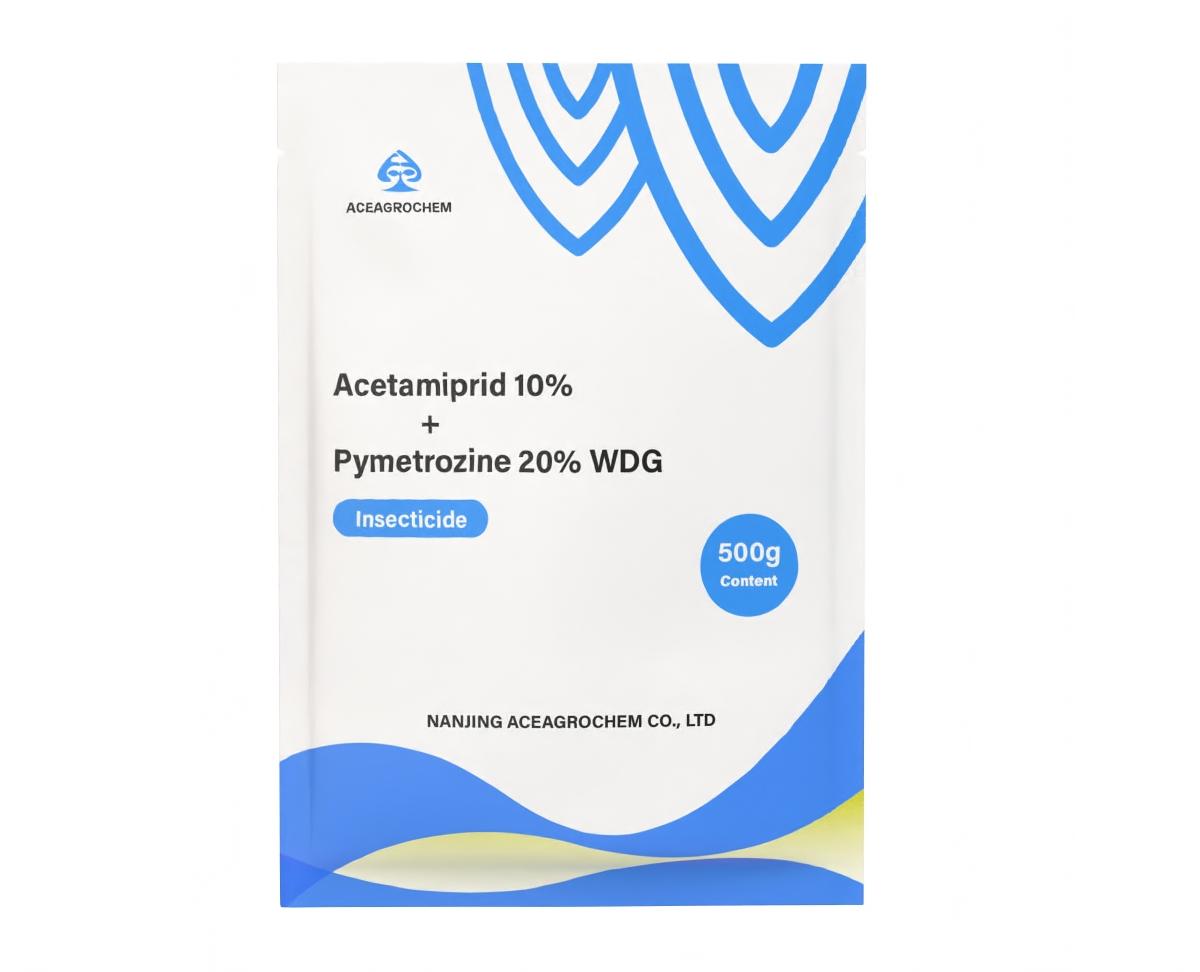
Acetamiprid 10% + Pymetrozine 20% WDG
Classification:
Insecticide
Formulation:
Acetamiprid 10% + Pymetrozine 20% WDG (Water Dispersible Granule)
CAS NO:
Acetamiprid: 135410-20-7;
Pymetrozine: 123312-89-0
USAGE:
This product is a compound insecticide, which has good control effect on aphids,
whiteflies, planthoppers and other pests on various crops such as vegetables,
fruit trees, cotton.
Pack size:
100g, 250g, 500g, 1kg/bag, or as required
Direction for Use
| Crop | Target Pests | Dosage (10% Acetamiprid + 20% Pymetrozine WDG) | Application Timing | Remarks |
|---|---|---|---|---|
| Vegetables | Aphids | 2000-3000 times dilution | At the initial stage of pest occurrence | 1) REI: 72 hrs 2) Spray evenly on the front and back of leaves |
| Fruit Trees | Whiteflies | 1500-2500 times dilution | When pests are active | Ensure thorough coverage of the canopy |
| Cotton | Planthoppers | 1000-2000 times dilution | Before the peak of pest occurrence | Repeat application if necessary |
Product Details
Mode of Action:
-Acetamiprid acts on the nicotinic acetylcholine receptor of pests, interfering
with the normal conduction of the pest nervous system.
-Pymetrozine mainly affects the feeding behavior of pests, making pests unable to
feed and starve to death.
-The combination of the two has a synergistic effect, with contact and stomach -
poisoning effects.
Benefits:
-Broad-spectrum insecticidal effect, effective against multiple pests
-Low-toxicity to mammals, relatively safe to humans and the environment
-Good systemicity, can be absorbed and conducted by plants
-Long residual effect, reducing the number of applications
Precautions:
-PPE: Wear chemical-resistant gloves, protective clothing and goggles
-Do not apply in windy weather to prevent drift
-Do not mix with alkaline Pesticide
-Storage: Store in a cool, dry and ventilated place, away from fire and heat
sources
Environmental Hazards:
-Toxic to bees and silkworms, do not use in the flowering period of bee -
attracting plants and near sericulture areas
-Avoid polluting water sources, do not discard waste packaging in water bodies
-Low toxicity to fish, but still need to pay attention to environmental protection