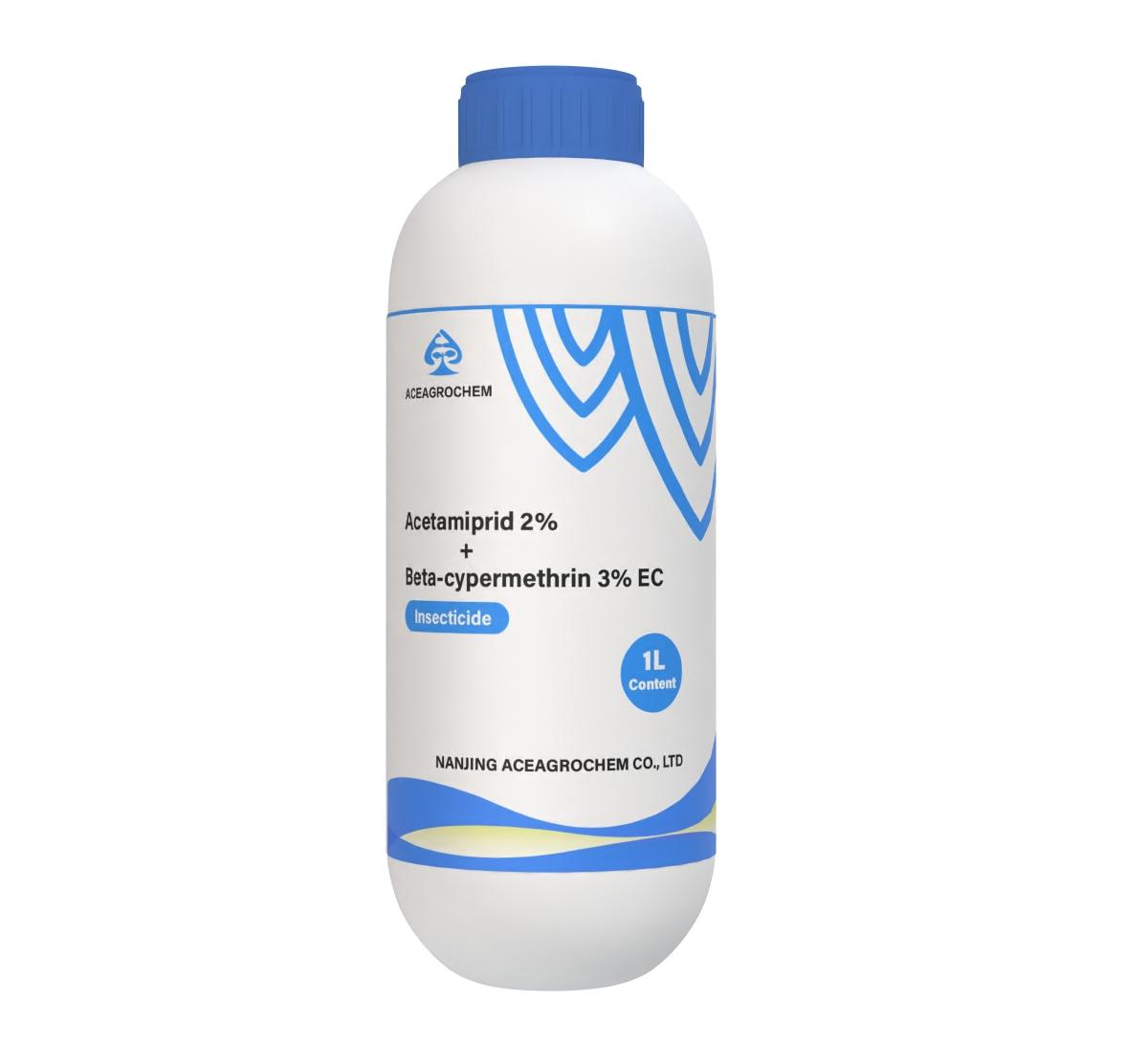
Acetamiprid 2% + Beta-cypermethrin 3% EC
Classification:
Insecticide
Formulation:
Acetamiprid 2% + Beta-cypermethrin 3% EC (Emulsifiable Concentrate)
CAS NO:
Acetamiprid: 135410-20-7;
Beta-cypermethrin: 65731-84-2
USAGE:
This insecticide is used for controlling a variety of pests in multiple crops
such as vegetables, fruits, and cotton. It is effective against aphids, thrips,
whiteflies, and some lepidopteran pests.
Pack size:
500mL, 1L, 5L, 20L/drum, or as required
Direction for Use
| Crop | Target Pests | Dosage (2% Acetamiprid + 3% Beta-cypermethrin EC) | Application Timing | Remarks |
|---|---|---|---|---|
| Vegetables | Aphids | 300-500 mL/ha | At the early stage of pest infestation | 1) REI: 12 hrs 2) Max 2 applications/season |
| Fruits | Thrips | 400-600 mL/ha | Before the flowering stage | Add adjuvant for better control |
| Cotton | Whiteflies | 500-700 mL/ha | When the pest population reaches the economic threshold | PHI: 21 days |
Product Details
Mode of Action:
-Acetamiprid acts on the insect's nervous system by interfering with nicotinic
acetylcholine receptors, causing paralysis and death.
-Beta-cypermethrin is a pyrethroid insecticide that affects the sodium channels in
the insect's nerve membranes, disrupting nerve impulse transmission.
-The combination of the two provides both contact and systemic action.
Benefits:
-Broad-spectrum insecticidal activity
-Quick knockdown effect
-Good residual activity
-Suitable for integrated pest management programs
Precautions:
-PPE: Chemical-resistant gloves, goggles, protective clothing
-Do not apply when winds exceed 15 km/h
-Do not use near bee-keeping areas during the flowering season
-Storage: Keep in a cool, dry place at 0°C to 35°C
Environmental Hazards:
-Toxic to aquatic organisms, especially fish and crustaceans
-Do not contaminate water sources such as rivers, lakes, and ponds
-Low to moderate toxicity to birds and mammals
-Degradable in soil under aerobic conditions