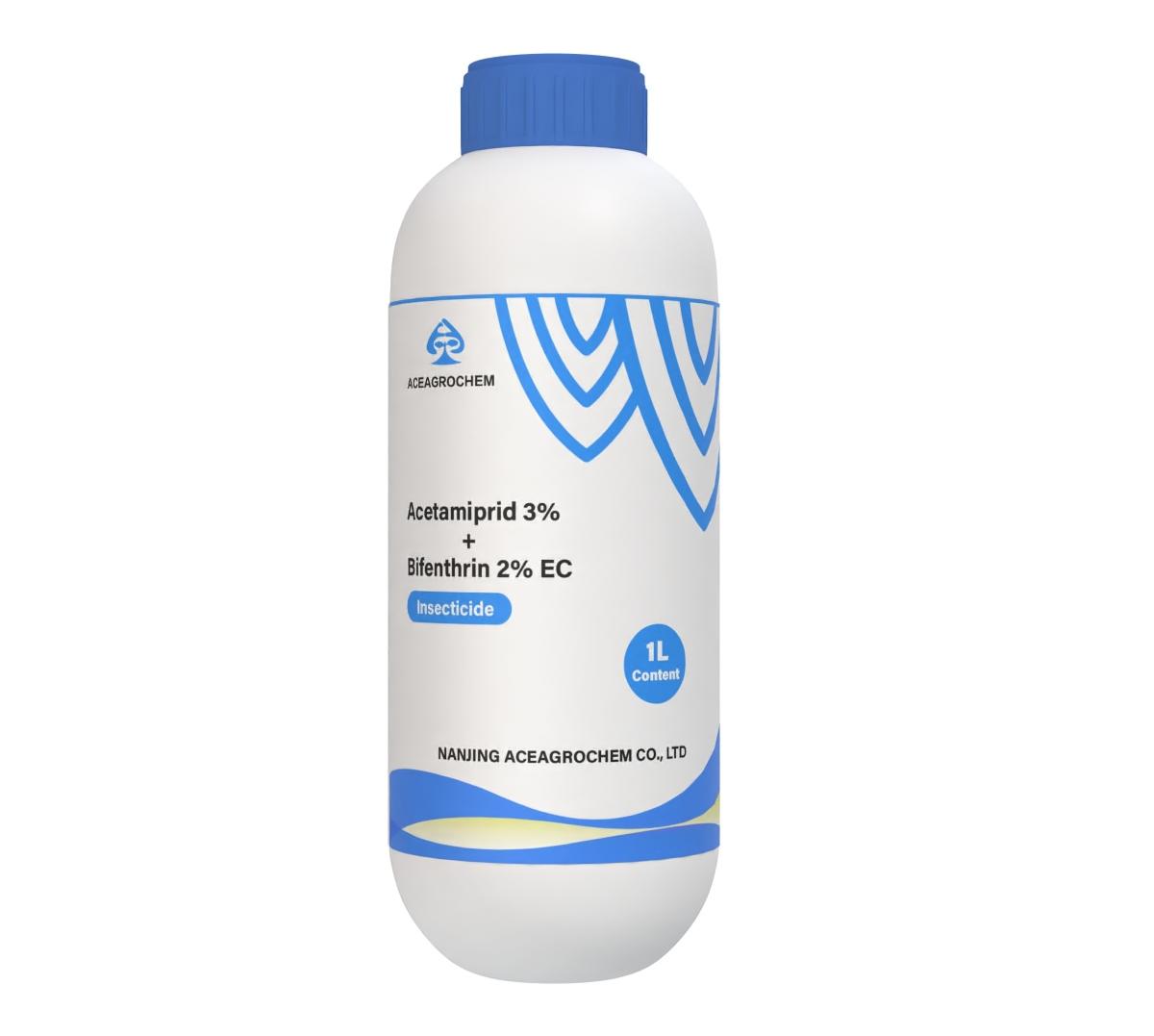
Acetamiprid 3% + Bifenthrin 2% EC
Classification:
Insecticide
Formulation:
Acetamiprid 3% + Bifenthrin 2% EC (Emulsifiable Concentrate)
CAS NO:
Acetamiprid: 135410-20-7;
Bifenthrin: 82657-04-3
USAGE:
This insecticide is used for controlling a wide range of pests in various crops.
It has good efficacy against sucking and chewing insects such as aphids,
whiteflies, thrips, and some beetles. Applicable crops include vegetables,
fruits, cotton, etc.
Pack size:
500mL, 1L, 5L, 20L/drum, or as required
Direction for Use
| Crop | Target Pests | Dosage (3% Acetamiprid + 2% Bifenthrin EC) | Application Timing | Remarks |
|---|---|---|---|---|
| Vegetables | Aphids, Whiteflies | 300-500 mL/ha | Early pest occurrence stage | 1) REI: 12 hrs 2) Max 2 applications/season |
| Fruits | Thrips, Beetles | 400-600 mL/ha | Before flowering or after fruit set | Add adjuvant for better adhesion |
| Cotton | Jassids, Bollworms | 500-700 mL/ha | Vegetative and reproductive stages | PHI: 21 days |
Product Details
Mode of Action:
-Acetamiprid acts on the insect's nervous system by binding to nicotinic
acetylcholine receptors, causing nerve blockage and insect death.
-Bifenthrin is a pyrethroid insecticide that affects the sodium channels of insect
nerve cells, leading to nerve dysfunction and paralysis.
-The combination has a dual-action mechanism, providing broader pest control
spectrum.
Benefits:
-Broad-spectrum pest control in multiple crops.
-Quick knockdown effect on pests.
-Long-lasting residual activity.
-Compatible with many other Pesticide for tank-mixing.
Precautions:
-PPE: Chemical-resistant gloves, goggles, protective clothing.
-Do not apply in windy conditions (wind speed > 15 km/h).
-Avoid spraying during the hottest part of the day.
-Storage: Keep in a cool, dry place at 0°C to 35°C.
Environmental Hazards:
-Toxic to fish and aquatic invertebrates.
-Do not contaminate water bodies such as rivers, lakes, and ponds.
-Low toxicity to birds, but avoid direct exposure.
-Degradable in soil (half-life 10-20 days).