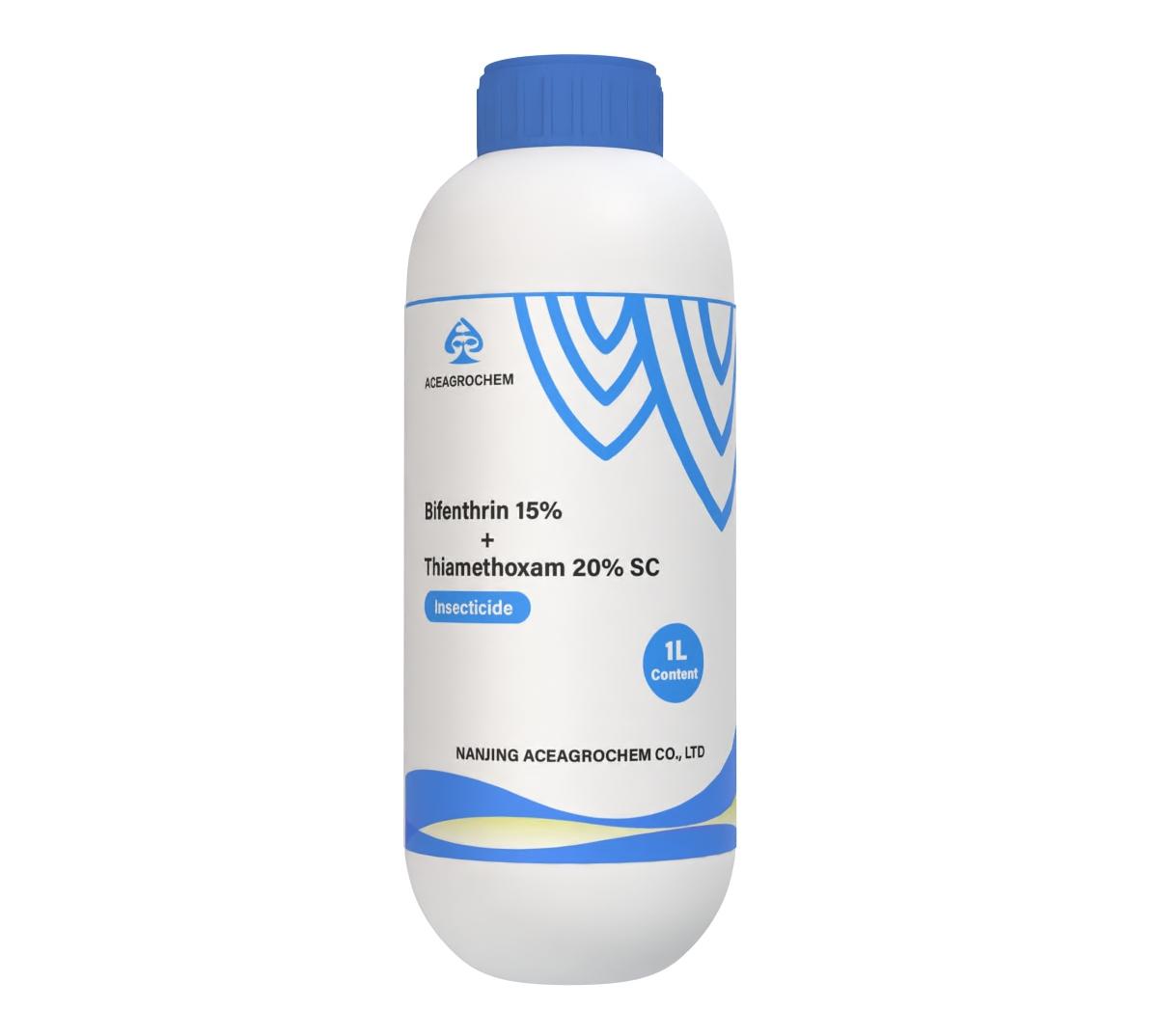
Bifenthrin 15% + Thiamethoxam 20% SC
Classification:
Insecticide
Formulation:
Bifenthrin 15% + Thiamethoxam 20% SC (Suspension Concentrate)
CAS NO:
Bifenthrin: 82657-04-3;
Thiamethoxam: 153719-23-4
USAGE:
This insecticide is used for controlling a wide range of pests in various crops
such as cereals, vegetables, fruits, etc. It can effectively control aphids,
whiteflies, thrips, and other sucking pests, as well as some chewing pests.
Pack size:
500mL, 1L, 5L, 20L/drum, or as required
Direction for Use
| Crop | Target Pests | Dosage (15% Bifenthrin + 20% Thiamethoxam SC) | Application Timing | Remarks |
|---|---|---|---|---|
| Cereals | Aphids | 300-500 mL/ha | Early pest infestation stage | 1) REI: 12 hrs 2) Max 2 applications/season |
| Vegetables | Whiteflies | 400-600 mL/ha | When pests start to appear | Add spreader for better coverage |
| Fruits | Thrips | 350-550 mL/ha | Before flowering or early fruit-setting stage | PHI: Varies according to different fruits |
Product Details
Mode of Action:
-Bifenthrin acts on the insect's nervous system by disrupting the sodium channels,
causing paralysis and death of insects.
-Thiamethoxam acts on the nicotinic acetylcholine receptor of insects, interfering
with the normal conduction of nerve impulses.
-The combination of the two has a synergistic effect, providing broad-spectrum
control.
Benefits:
-Broad-spectrum control of multiple pests.
-Long-lasting residual effect, reducing the frequency of applications.
-Good rainfastness after a short period of drying.
-Low phytotoxicity to most crops.
Precautions:
-PPE: Chemical-resistant gloves, respirators, and goggles.
-Do not apply when winds exceed 18 km/h.
-Do not mix with alkaline Pesticide.
-Storage: Keep in a cool, dry place at 5°C to 35°C.
Environmental Hazards:
-Toxic to bees and beneficial insects. Do not apply during the flowering period of
crops.
-Toxic to aquatic organisms. Avoid contamination of water sources.
-Low toxicity to mammals, but still handle with care.