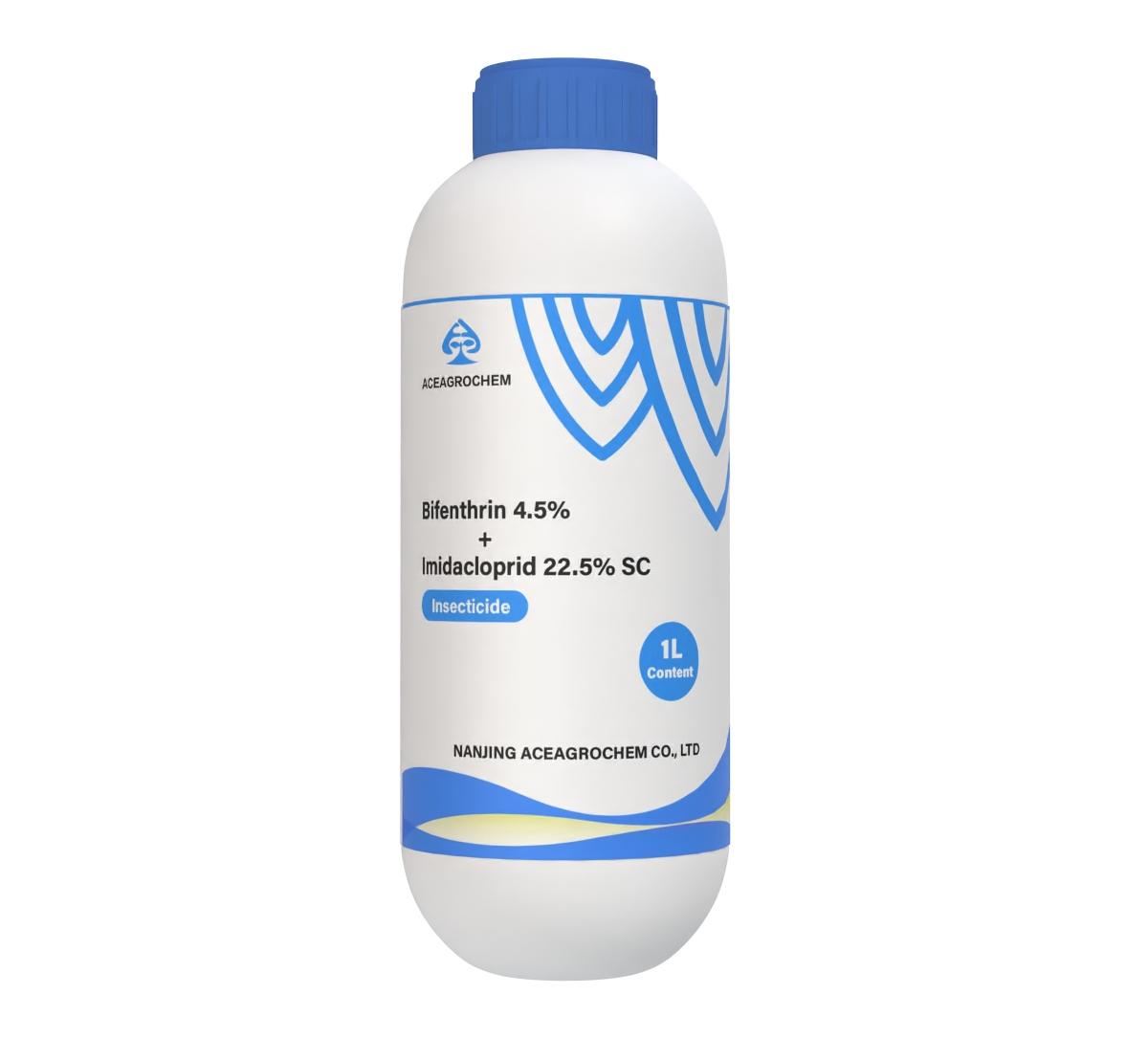
Bifenthrin 4.5% + Imidacloprid 22.5% SC
Classification:
Insecticide
Formulation:
Bifenthrin 4.5% + Imidacloprid 22.5% SC (Suspension Concentrate)
CAS NO:
Bifenthrin: 82657-04-3;
Imidacloprid: 138261-41-3
USAGE:
This insecticide is used for controlling a wide range of insects in various
crops. It is effective against sucking and chewing insects such as aphids,
whiteflies, thrips, and beetles. Suitable for use in crops like cotton,
vegetables, fruits, and cereals.
Pack size:
250mL, 500mL, 1L, 5L, 20L/drum, or as required
Direction for Use
| Crop | Target Insects | Dosage (4.5% Bifenthrin + 22.5% Imidacloprid SC) | Application Timing | Remarks |
|---|---|---|---|---|
| Cotton | Aphids, Whiteflies | 300-500 mL/ha | When the first signs of insect infestation appear | 1) REI: 12 hrs 2) Max 2 applications/season |
| Vegetables | Thrips, Beetles | 200-400 mL/ha | Early growth stage or at the onset of insect activity | Check for any pre-harvest intervals specific to the vegetable |
| Fruits | Codling moths, Leafrollers | 400-600 mL/ha | Before the egg-laying period of the target insects | PHI: Varies depending on the fruit type |
| Cereals | Aphids, Armyworms | 350-550 mL/ha | Tillering to booting stage | Use a suitable sprayer for uniform coverage |
Product Details
Mode of Action:
-Bifenthrin acts as a contact and stomach poison by disrupting the nervous system
of insects.
-Imidacloprid is a systemic insecticide that acts on the nicotinic acetylcholine
receptors in the insect nervous system.
-The combination provides both quick knockdown and long-term control.
Benefits:
-Broad-spectrum insect control in multiple crops.
-Good residual activity, reducing the need for frequent applications.
-Compatible with many other Pesticide for tank-mixing (check compatibility
first).
Precautions:
-PPE: Wear chemical-resistant gloves, face shield, and protective clothing.
-Do not apply in windy conditions to avoid drift.
-Do not contaminate water sources during application or cleaning of equipment.
-Storage: Store in a cool, dry place away from food, feed, and seeds. Keep at
temperatures between-5°C and 35°C.
Environmental Hazards:
-Toxic to bees and other beneficial insects. Do not apply when bees are actively
foraging.
-Toxic to aquatic organisms. Avoid direct runoff into water bodies.
-Low toxicity to mammals, but still handle with care.