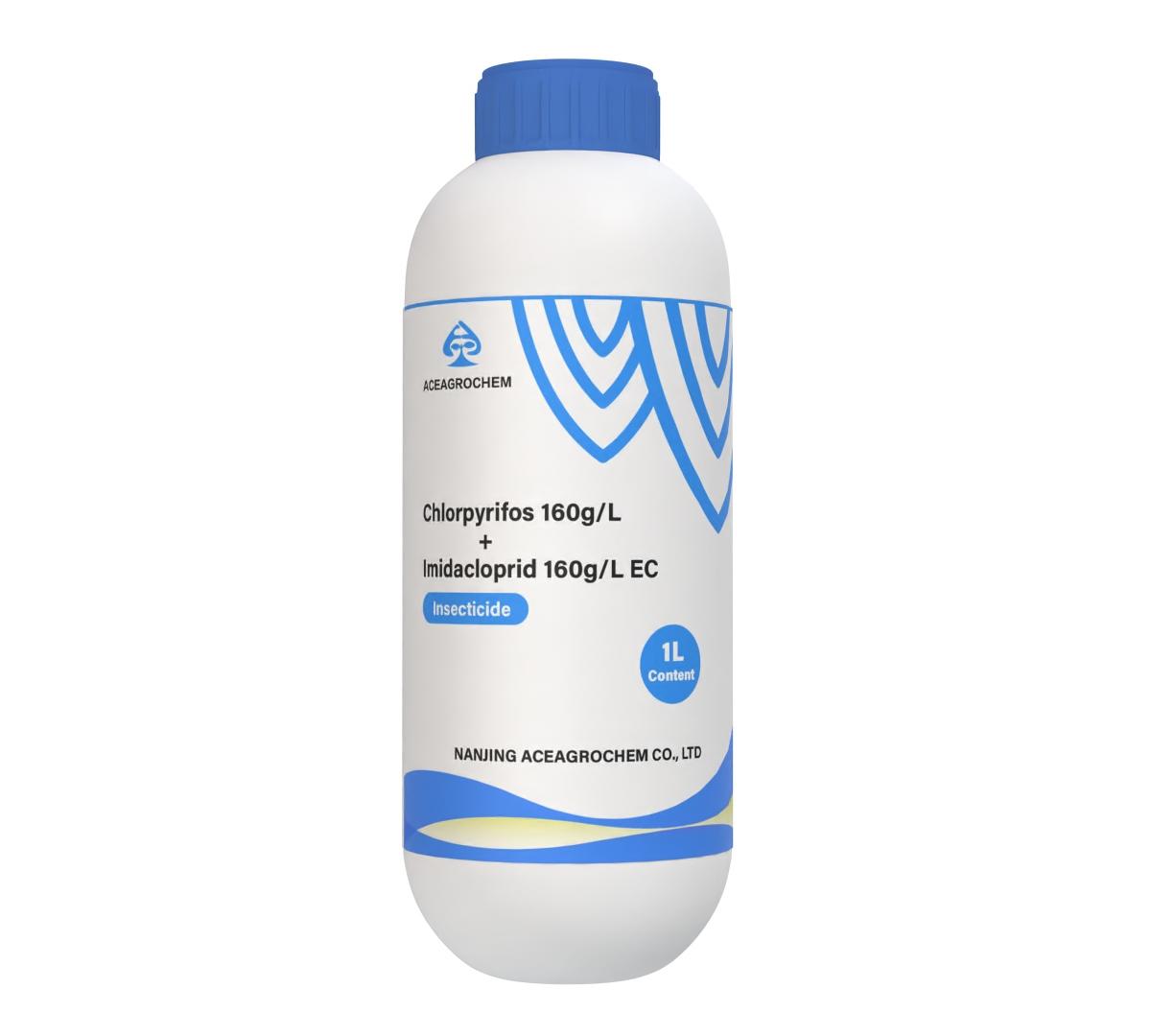
Chlorpyrifos 160g/L + Imidacloprid 160g/L EC
Classification:
Insecticide
Formulation:
Chlorpyrifos 160g/L + Imidacloprid 160g/L EC (Emulsifiable Concentrate)
CAS NO:
Chlorpyrifos: 2921-88-2;
Imidacloprid: 138261-41-3
USAGE:
A broad-spectrum insecticide used for controlling a variety of sucking and
chewing insects in a wide range of crops such as cereals, vegetables, fruits,
and cotton. Effective against aphids, thrips, whiteflies, leafhoppers, and some
beetles.
Pack size:
500mL, 1L, 5L, 20L/drum, or as required
Direction for Use
| Crop | Target Insects | Dosage (160g/L Chlorpyrifos + 160g/L Imidacloprid EC) | Application Timing | Remarks |
|---|---|---|---|---|
| Cereals | Aphids, Leafhoppers | 400-600 mL/ha | Early growth stage | 1) REI: 24 hrs 2) Max 2 applications/season |
| Vegetables | Whiteflies, Thrips | 300-500 mL/ha | When insects first appear | PHI: 7-10 days depending on the vegetable type |
| Fruits | Beetles, Aphids | 500-700 mL/ha | Before flowering or after fruit setting | Add adjuvant for better adhesion |
| Cotton | Jassids, Bollworms | 600-800 mL/ha | From squaring to boll formation | Use in combination with other pest management practices |
Product Details
Mode of Action:
-Chlorpyrifos acts on the nervous system of insects by inhibiting
acetylcholinesterase (AChE), leading to the accumulation of acetylcholine and over -
stimulation of the nervous system.
-Imidacloprid acts on the nicotinic acetylcholine receptors (nAChRs) in the
insect's central nervous system, causing paralysis and death.
-The combination has both contact and systemic action, allowing for effective
control of insects on the plant surface and within the plant tissue.
Benefits:
-Broad-spectrum control of multiple insect pests.
-Long-lasting residual activity.
-Suitable for different application methods such as foliar spray and soil
treatment.
-Can be used in integrated pest management (IPM) programs.
Precautions:
-PPE: Chemical-resistant gloves, goggles, respirator.
-Do not apply in windy conditions (wind speed > 15 km/h) to avoid drift.
-Do not apply near water sources or areas with high bee activity.
-Storage: Keep in a cool, dry place at 10°C to 30°C.
Environmental Hazards:
-Toxic to aquatic organisms, especially fish and invertebrates.
-May be harmful to bees and other beneficial insects.
-Chlorpyrifos has a relatively long half-life in soil (1-3 months), and
imidacloprid can also persist in the environment. Avoid excessive use to prevent
environmental contamination.