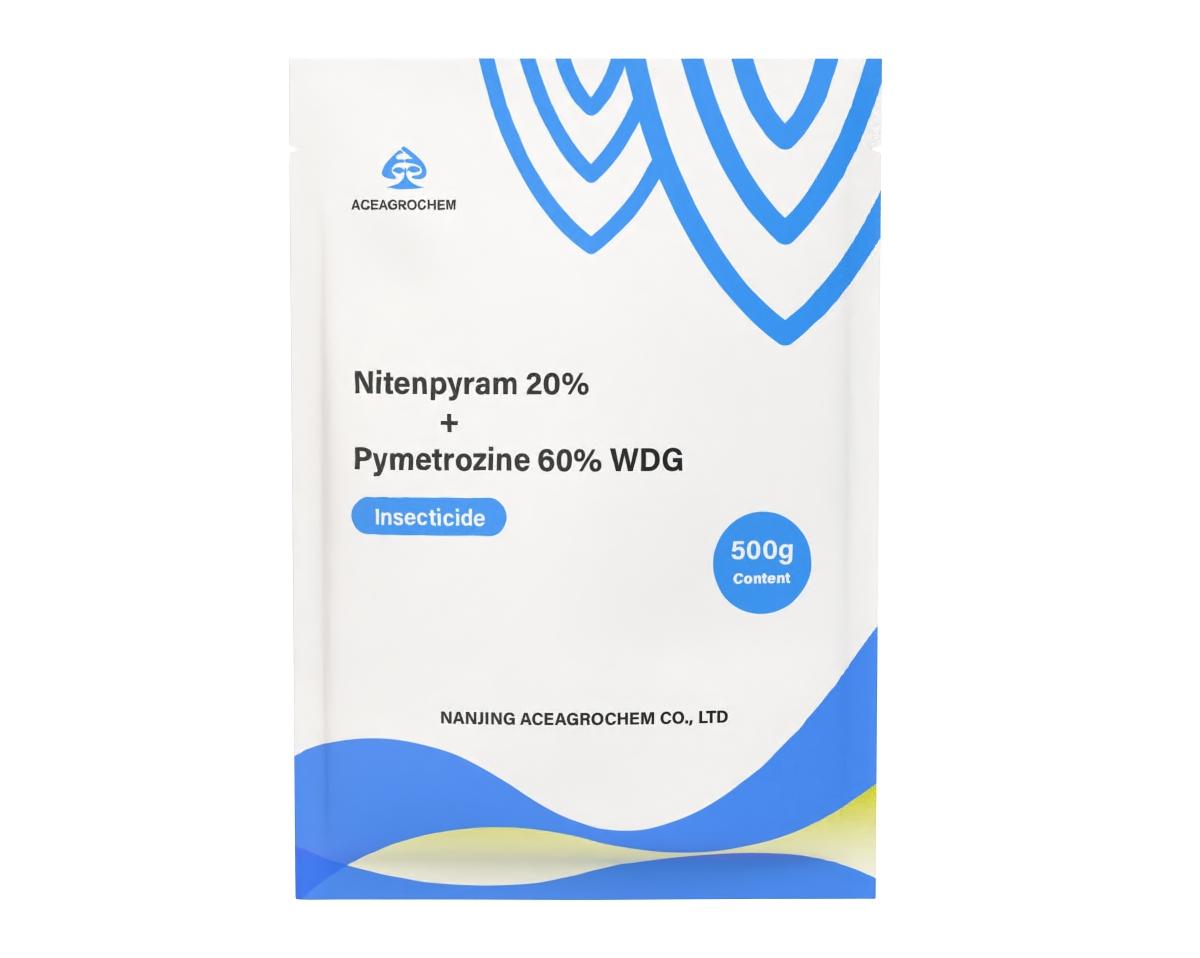
Nitenpyram 20% + Pymetrozine 60% WDG
Classification:
Insecticide
Formulation:
Nitenpyram 20% + Pymetrozine 60% WDG (Water-Dispersible Granules)
CAS NO:
Nitenpyram: 120738-89-8;
Pymetrozine: 123312-89-0
USAGE:
This insecticide is used for controlling a wide range of sucking insects such as
aphids, whiteflies, planthoppers in various crops including rice, vegetables,
fruits. It has a broad-spectrum insecticidal activity and can effectively
protect crops from insect damage.
Pack size:
100g, 250g, 500g, 1kg/bag, or as required
Direction for Use
| Crop | Target Insects | Dosage (20% Nitenpyram + 60% Pymetrozine WDG) | Application Timing | Remarks |
|---|---|---|---|---|
| Rice | Planthoppers, Leafhoppers | 200-300 g/ha | At the early stage of insect infestation | 1) REI: 12 hrs 2) Max 2 applications/season |
| Vegetables | Aphids, Whiteflies | 150-250 g/ha | When insects are first detected | Spray evenly on the foliage |
| Fruits | Psyllids, Mealybugs | 250-350 g/ha | Before the peak of insect population | PHI: Depend on the specific fruit crop, follow local regulations |
Product Details
Mode of Action:
-Nitenpyram acts on the nicotinic acetylcholine receptors of insects, causing
paralysis and death of insects.
-Pymetrozine acts on the feeding behavior of insects, preventing them from sucking
plant sap, leading to starvation and death of insects.
-The combination has a synergistic effect, providing a more comprehensive and
effective insect-controlling ability.
Benefits:
-High-efficiency control of multiple sucking insects.
-Low toxicity to non-target organisms such as bees and natural enemies when used
properly.
-Good rainfastness, can maintain effectiveness even after rainfall.
-Suitable for integrated pest management programs.
Precautions:
-PPE: Wear chemical-resistant gloves, goggles, and a respirator if necessary.
-Do not apply in strong sunlight or high-temperature weather.
-Avoid tank-mixing with alkaline Pesticide.
-Storage: Store in a cool, dry place away from heat and direct sunlight, at 0°C to
30°C.
Environmental Hazards:
-Toxic to aquatic organisms, avoid contaminating water bodies.
-Has low impact on soil organisms when used within the recommended dosage.
-Be cautious in areas close to bee colonies, as it may have some impact on bees.